Supporter of the ‘underdog’ and fair play, freedom of the individual balanced with responsibility to the community. Supporter of our heritage and countryside. Environmental campaigner for action on climate change, sustainable farming, transport and economy
About James MacCleary – Liberal Democrat Parliamentary Candidate for the Lewes Constituency
James MacCleary, BA., MSc.,
James is the Parliamentary Candidate for the Lewes Constituency in the General Election which will be held on July 4th.
He has lived in Newhaven for 8 years with his young family. Prior to that, he was a Lewes resident and Lewes councillor.
Currently he is a Lewes District and an East Sussex County Council Councillor. Between 2019 and 2023 he was Leader and Deputy Leader of Lewes District Council in a shared role .
Local government roles:
He was both Group Leader of the Liberal Democrats at the Lewes District Council from 2019 to 2024.
Lewes District Councillor from 2007-2015 (Bridge Ward) and 2019 to present (Newhaven).
Councillor – East Sussex County Council May 2021 – present
Councillor – Newhaven Town Council May 2019 – May 2023
Lewes Town Councillor from 2011-2015
Business Roles:
Director – Breakthrough Communications & Strategies
Campaigns and Stakeholder Manager – National Literacy Trust
Campaign Director – European Movement UK
Campaign Manager – RSPCA
Education:
University of Kent – BA, Politics and International Relations
University of Oxford – MSc, Russian and East European Studies
More information:
Liberal Democrat Manifesto 2024: with a summary of policies and link to the full document
The General Election is just weeks away, on the 4th July…… But who will win in Lewes?
The chart above shows the state of the parties in the 2019 election
The General Election is just weeks away, on the 4th July……
But who will win in Lewes?
In the elections of 2015. 2017 and 2019 the Conservatives won with the Liberal Democrats hot on their heels. Both parties were many thousands ahead of the other parties. So, it looks like a battle between the Tories and the Lib Dems.
However, we have to remember this is a First Past The Post election where the winner takes all, even if they are just a handful of votes ahead of the rest. This means if the Green and Labour parties put in a good showing, then the Conservatives could easily retain the seat. On the other hand, if the Reform Party does in fact put in nomination papers for their candidate, then the Conservatives are likely to suffer. No doubt the campaign will hot up in June!
Here is a guide to the results of the 2019 election:
The Conservatives won in 2019 with 2,457 votes, – just 4.50% margin. This was down by 5.7% from the 2017 election.:
The General Election in the UK on 4th July presents a crucial opportunity to restore hope for the nation.
The General Election in the UK on 4th July presents a crucial opportunity to restore hope for the nation. This election is a pivotal moment for the country to address pressing issues and make decisions that can shape a brighter, more positive future for all its citizens. By participating in the democratic process, voters have the power to influence policies that tackle economic challenges, improve public services, and enhance the overall quality of life. This election is a chance to bring about meaningful change, promote unity, and build a future filled with optimism and opportunities for everyone in the UK.
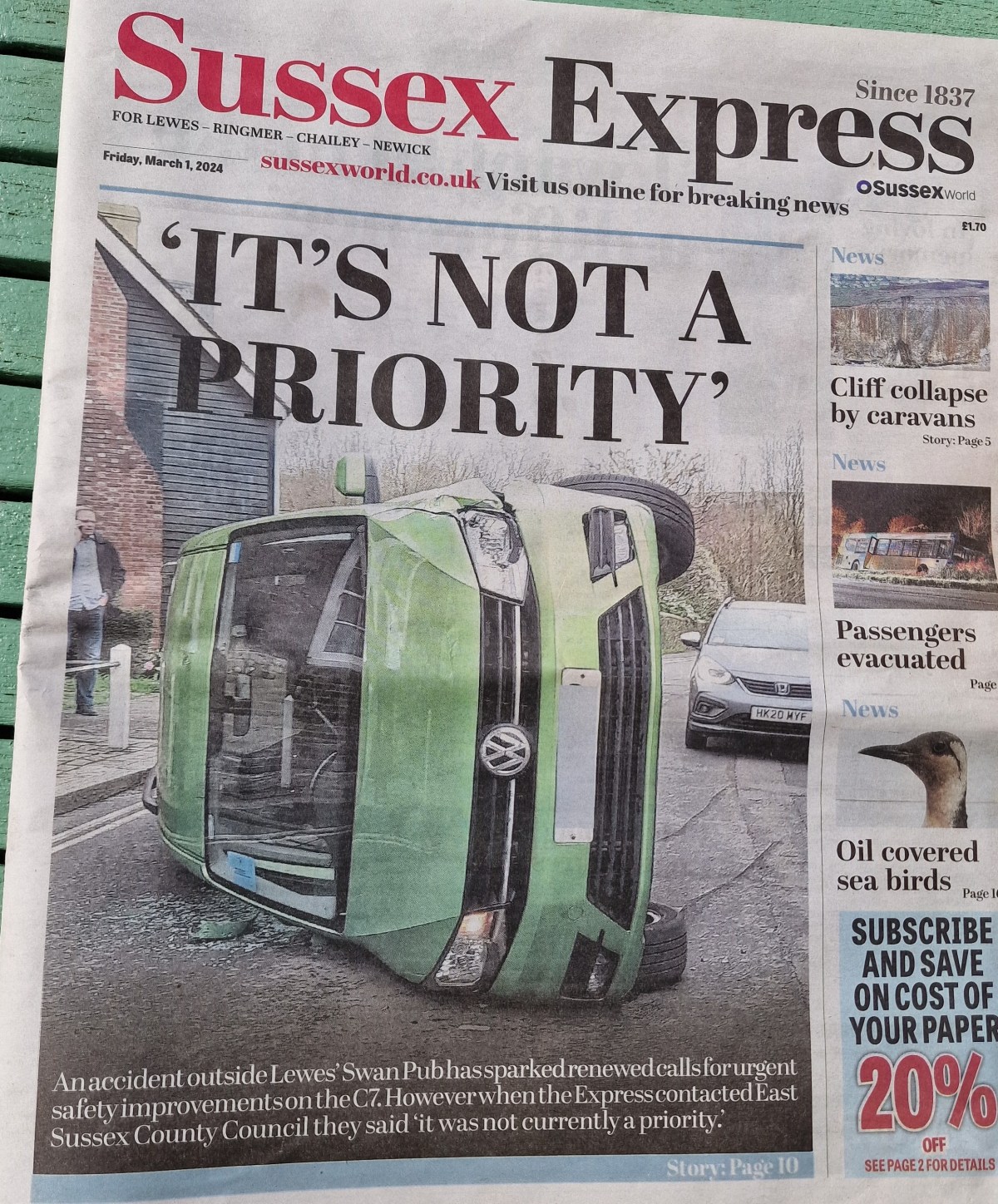
Traffic Calming on the Kingston Road Lewes and at the Swan Inn is not likely to happen anytime soon because of the ESCC ‘sitting on their hands’ and the Lewes Town Council being caught up in ‘administrative’ processes!
A report by Vic Ient
9th April 2024
As some in Lewes may know, I have been corresponding with East Sussex County Council (ESCC) about my concerns for safety along the Kingston Road and at the Swan Inn junction, Lewes. I have also been in touch with the Lewes Town Council to gain their support as, so far, ESCC are finding all sorts of excuses to do nothing. ESCC are not willing to change their stance until there is a death or serious injury. Also, despite my appeal, I fear the Lewes Town Council, will not take a lead on this issue and put together a funding plan in the near future. It all adds up to delay, delay, delay!
It would be helpful if others take up the issue in order to show there is public support for action.
A 2 week touring holiday in northern Spain, visiting 3 historic and beautiful cities with our EV car. 600 miles and zero global warming emissions. A fantastic visit to three beautiful ancient cities
A two-week touring holiday in northern Spain:visiting 3 historic and beautiful cities with our EV car
Just over 950 km (600 miles) -Three time the distance between London and Manchester. One charge en route an 2 short charges at hotels (one free!). Zero CO2 emitted and zero global warming emissions from our car!
April 2023
By Ferry from Portsmouth to Santander
For some time we had wanted to visit the wonderful historic cities of Salamanca, Segovia and Ávila in western Spain and in 2023 we decided to make it happen by travelling first by ferry to Santander in northern Spain. We decided to check out Brittany Ferries new low emissions ship, Santoña (fuelled by LNG instead of dirty old marine diesel oil). It certainly was a much more pleasant experience as when on deck you didn’t get that smelly smoke in the downdraft depending on which way the wind was blowing. We then had the question of shall we take the car or shall we go by train to these cities?
Travelling in Spain by electric car or train?
It is certainly possible to travel by train, on the often new, electrified service. However I wanted to experiment in taking my electric car abroad. It’s a Kia Niro with a 64.8 kWh battery with a range of about 285 miles. Over the three years that I’ve had this car I’ve found that the manufacturer’s range prediction to be pretty accurate.
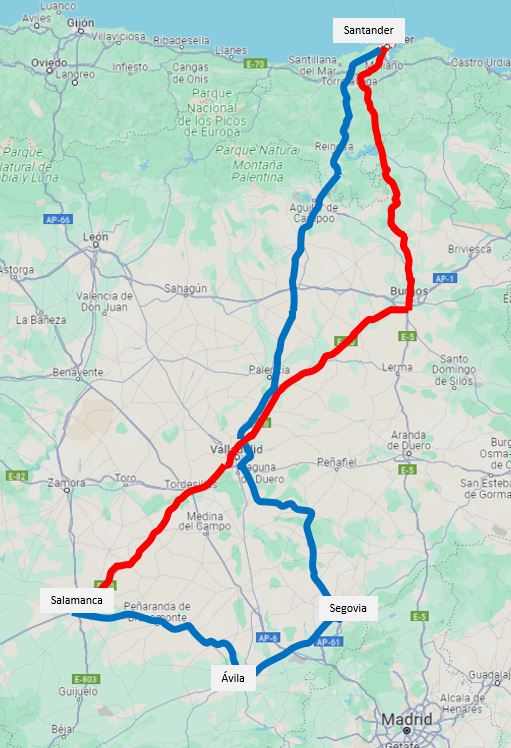
Having done some research on recharging stations, I was confident that we could make the journey despite the fact that the distances on the rural sections of our trip were sparsely populated with charging stations. My confidence was boosted by the relatively good range of our Kia Niro EV car as it was clear that whilst we may not find a charging station out in the countryside or going through the Picos de Europa mountains we would certainly find stations in the bigger towns. For day one of our journey in Spain I was fairly safe in the knowledge that we could call into the large city of Burgos to refuel before going on to Salamanca. The total distance between Santander where the ferry arrived and Salamanca is 265 Miles (426 km). I realised the range of my car would not cover this distance in one hop.
Charging your car abroad
The other question which arises is how do you charge your car abroad? It was clear one had to get a charging card from one or other suppliers. I didn’t want to get tied down to a supplier for only one country as this would be limiting on future visits to other European countries. After some brief research I found that taking up membership with Chargemap would give us access to a wide range of charging stations across Europe no matter who the local supplier was. You have to sign up for their card which costs €19.90 for a one-off purchase. Their app also provides you with a map of all compatible stations in the country you are driving through. I decided that it was worthwhile getting this card rather than relying upon the possibility of just using a credit card or using my European Shell Recharge card. Shell had lots of EV recharge stations in Europe but didn’t have any in Spain. On the other hand the Chargemap service seemed to have loads of stations on their map. This turned out to be correct as the main Spanish petrol and diesel fuel supplier, Iberdrola, also provided most of the intercity and motorway charging stations. It was clear that the Chargemap service was compatible with the Iberdrola stations.
At Portsmouth we recharged at the Instavolt fast charging station which is within the ferry port area. This was hugely convenient as we didn’t have to stop on the way to Portsmouth and we would be ready to go immediately on arrival in Spain.
Santander to Salamanca
After a very pleasant crossing we arrived at 8 am. We set off on the old main road south towards Salamanca. It was a lovely journey through the Picos de Europa and the road was relatively quiet as most of the traffic uses the autopista (motorway). Once though the mountain range we entered the high plains of the Castile and Leon province. We called into Burgos to recharge the car. We had looked for charging stations on the road down to Burgos but the few we saw were still in construction. It was a bit confusing in Burgos because my onboard map system didn’t make it clear where the charging stations were. I believe it was out of date, So we used the Chargemap map on my smartphone. This made things a little difficult because I was the driver and couldn’t look at the app and drive at the same time. After a number of stops we eventually found an Iberdrola co located with a fuel station.
We were pleasantly surprised when we got to our hotel in Salamanca (the NH hotel Palacio de Castellanos ) as it had two charging stations in the garage. The concierge helped me load down their own app so we were able to charge up ready for when we left Salamanca.
Salamanca is a beautiful ancient university city and is well worth a visit. The central part of the city is a UNESCO world heritage site because of its important historical and architectural heritage. It has many stunning buildings, pedestrianised streets and great restaurants.
Our next stop was the ancient fortified town of Ávila. It was only just over 100 km away, well within the 400 + km range of our car. Again, we were pleasantly surprised when we got to our hotel, the Parador de Ávila, as this also had charging stations in the garage and this time they were free! Avila is absolutely worth visiting for its remarkably well-preserved mediaeval walls and historic architecture.
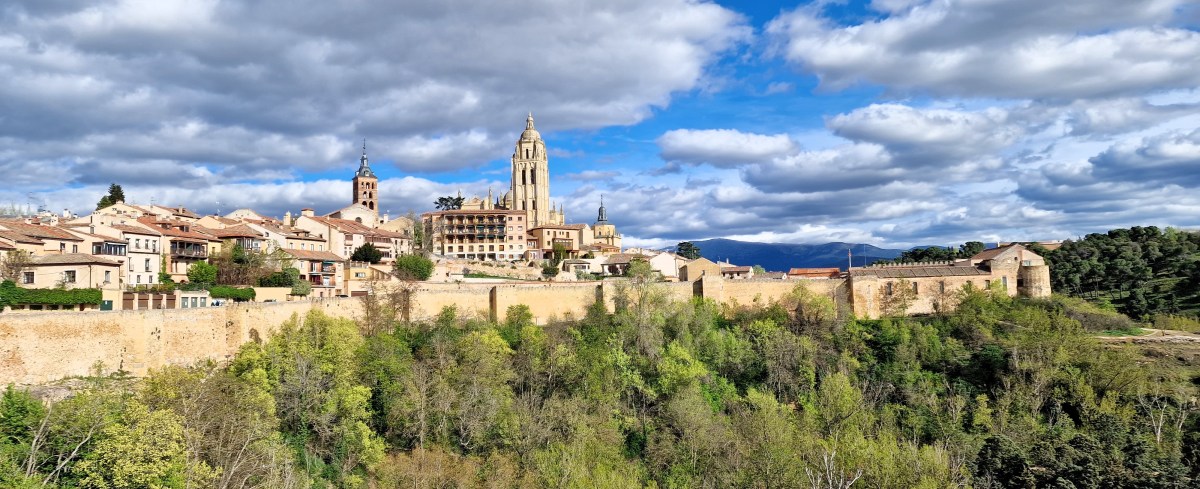
Our next stop was just 65 km east to Segovia. Our hotel was in the central plaza mayor and they operated valet parking so we were unable to charge. However we weren’t worried about this as we had over 350 km range remaining. Segovia is another world heritage city; a must see is the massive Aqueduct of Segovia. It is the defining historical feature of the city. It was built by the Romans in the first century AD to channel water from springs in the mountains 17 kilometres away. Another must see is the Alcázar (palace). It may have had Roman origins but certainly by being called ‘alcázar’ it was probably a Moorish palace prior to the ‘reconquista’. It has been much modified over the centuries and now resembles a German castle more suited to the banks of the Rhine in Bavaria with its tall towers overlooking the surrounding plains and countryside on the edge of the city. It was one of the favoured residences of the kings of Castile.
After a fantastic visit to these three beautiful ancient cities it was time for us to journey back to Santander to get the ferry home. The distance to Santander is just over 360 km (226 miles)so we didn’t need to charge on the way back to Santander.
Conclusion
Since the trip to Spain my car has been in for a service and the onboard map has been updated. I should have made sure it was updated at the previous service. However the Chargemap app was very good and using their mapping tool was accurate. You just have to plan things a bit more carefully to avoid having to keep on stopping to look at the app.
I was very impressed with two of the hotels we stayed at who had their own charging points. This made life a lot easier. As far as charging on the motorways are concerned I expect that those we saw under construction are now working and that should also make life a lot easier as driving around a city trying to find a charging point in a country you don’t know very well isn’t easy.
Map of our Journey: red is the outward journey and blue the return
Cycling part of the Camino de Santiago in Spain starting from Bayonne in SW France and the final part through the Picos Europa. A 400 miles cycle ride with over 26,000 ft (7958 m) of ascent (phew!). A great adventure and some major challenges! Both the journey through the Pyrenees and the journey through the Picos de Europa. were fantastic!
Cycling the Camino de Santiago through the Basque Country, Navarra, La Rioja, Castilla y Leon and Cantabria
Vic Ient’s diary blog – October 2023 Photo collection click HERE
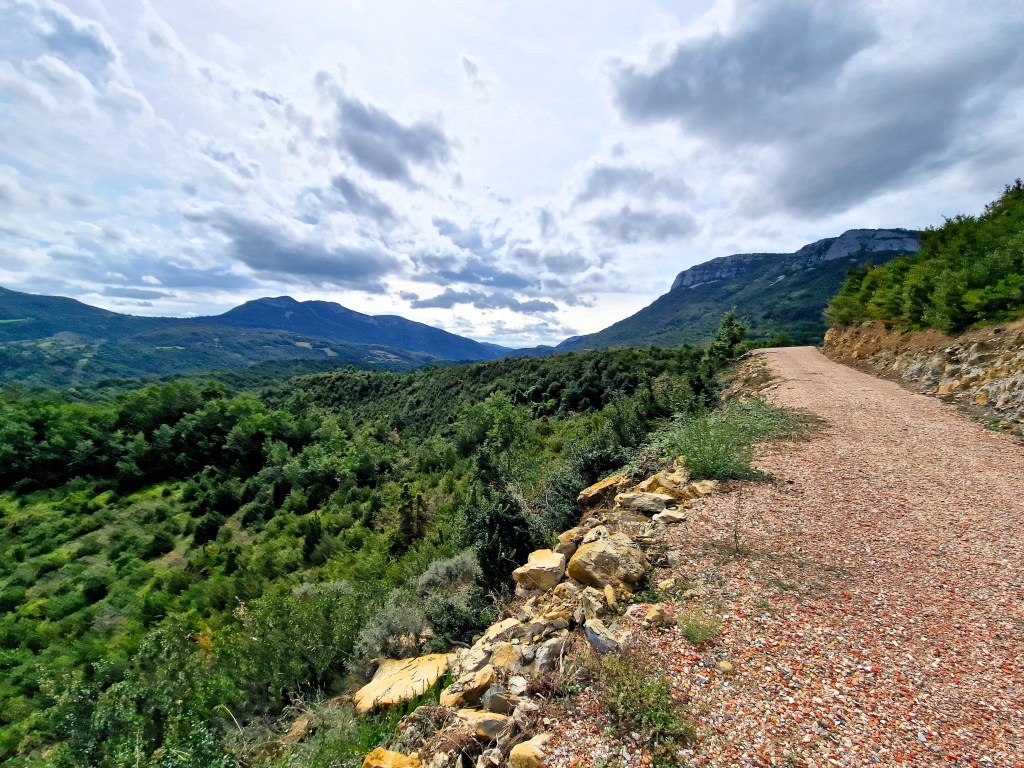
I have recently returned from cycling part of the Camino de Santiago in Spain starting from Bayonne in SW France and the final part through the Picos Europa. A 400 miles cycle ride with over 26,000 ft (7958 m) of ascent (phew!). Great adventure and some major challenges!
2025 Update! – Cycling UK, the UK’s national cycling charity, in its Feb/Mar 2025 edition published a 4 page spread about the trip. Click the image above to read the article and see the photos of the trip.
Update! My cycling companion, Jonathan has made a short video of the trip:
In 2019, my friend Jonathan and I cycled about 300 miles of the Camino Francaise from, Frómista, just west of Burgos to Santiago de Compostella. This year, 2023, was the first time after COVID we had the opportunity of completing the first section of the Camino de Santiago, from Saint-Jean-Pied-de-Port to Frómista, where our 2019 journey started. This time we were joined by our friend John Clark.
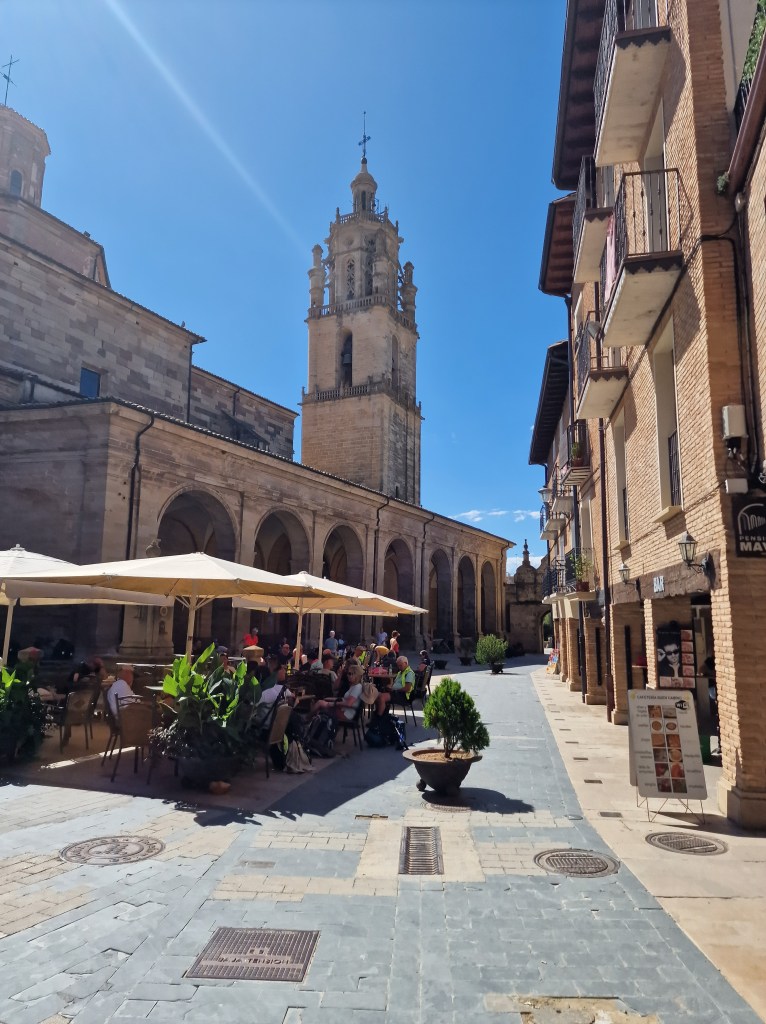
A welcome stop for lunch in a town on the Camino de Santiago
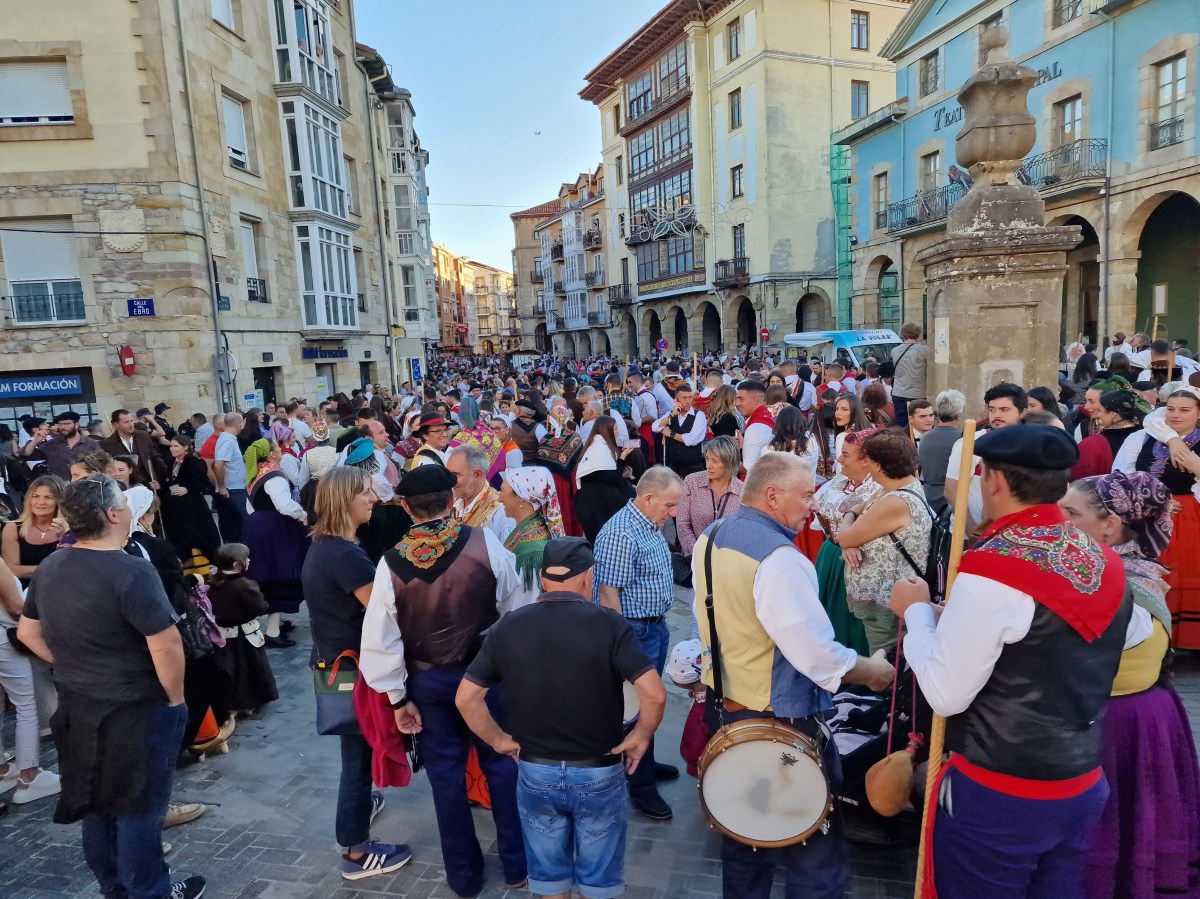
During our cycle ride along the Camino de Santiago we were lucky on two occasions, one at Logroño, and the other in Reinosa, to have arrived during major fiestas. They were both associated with the week-long fiesta of San Mateo (St Matthew).
In Rioja and Cantabria
Travel notes by Vic Ient – September 2023
To read more and see photos about our amazing cycle ride CLICK HERE
During our cycle ride along the Camino de Santiago we were lucky on two occasions, one at Logroño, and the other inReinosa, to have arrived during major fiestas. They were both associated with the week-long fiesta of San Mateo (St Matthew).
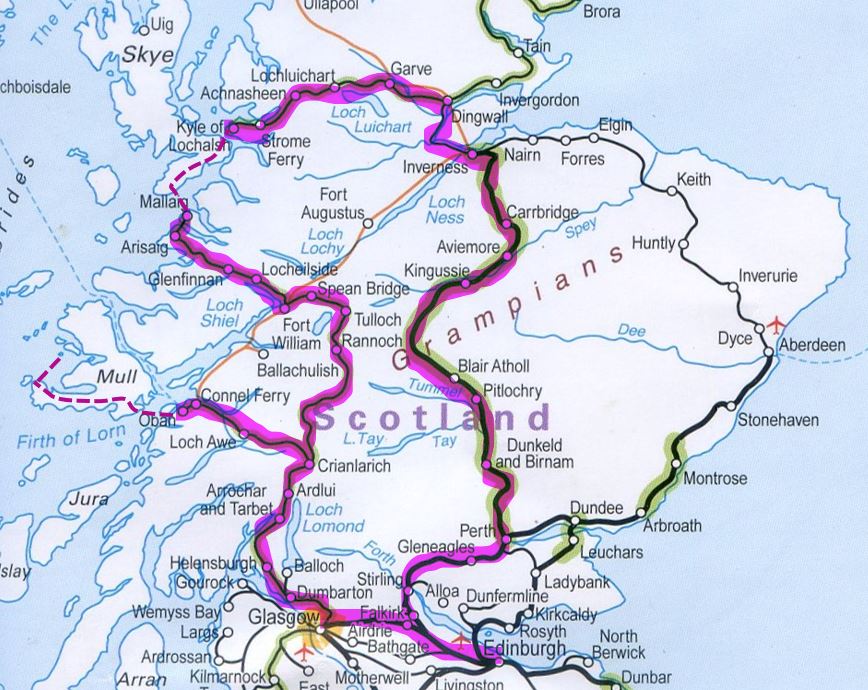
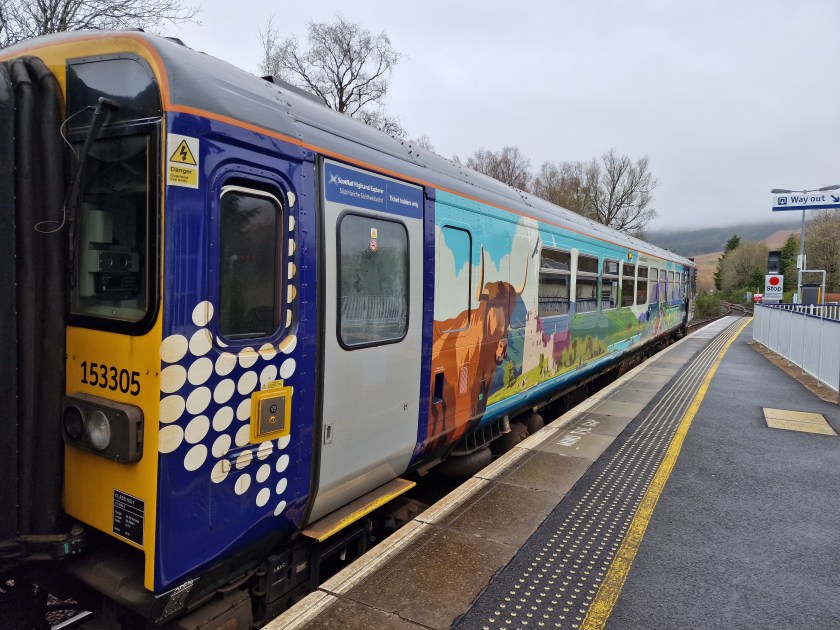
I’ve always wanted to travel around the Highlands of Scotland by train and this year I was able to fulfil this ambition. It was a fantastic visit. The weather was marvellous and so was the scenery. My wife I travelled up to Scotland on the intercity train from London to Edinburgh and then crossed to Glasgow, where our journey started. as you will see from our itinerary below, we travelled up the West Coast.
From Glasgow we travelled up the West Coast Highland line to Oban. A fascinating train journey! We stayed a few days at Oban. We had an absolutely fantastic visit to the Island of Mull, the Isle of Staffa where Fingal’s Cave is situated and Iona, which is where St. Columba is reputed to have begun his pilgrimage having travelled from Ireland. We also visited Tobermory on the Isle of Mull. Our train journey continued up the West Coast to Mallaig and over the over the famous Glenfinnan Viaduct and on with a brief visit to the Isle of Skye. We continued our railway journey from Kyle of Lochalsh railway station through Ross and Cromarty (north of the Caledonian canal) in superb weather. The train journey then took us down through the Spey Valley, through Aviemore, and through the Cairngorms which was equally scenic. We made a final stop off in the Highlands at Pitlochry to visit the hydroelectric dam which started generating clean energy in 1951! What a feat of engineering! The good weather continued for our final part of our journey to Edinburgh which is always a pleasure to visit. The icing of on the cake at Edinburgh was meeting up with my cousin and her husband before we returned south.
Liberal Democrat policies and beliefs – check out this collection of links to web sites providing further information
Here is a collection of links to web sites providing further information. A good starting point is Sir Ed Davey’s speech to the 2023 spring conference of the Liberal Democrats: Ed Davey’s speech to Spring Conference (52 mins) This link also gives the text of his speech (very useful)
The Association of Liberal Democrat Councillors (ALDC), also have policy and information to support campaigners with advice, resources and training ☎️: 0161 302 7532 📧: info@aldc.org Twitter: @ALDC https://www.aldc.org/ You may find this helpful:
The UK needs an ‘Operation Nightingale’ for Ukrainian refugees – Over 100,000 UK families are offering rooms in their homes but staging post accommodation is needed now!
The British people have demonstrated this week that they are very willing to help the Ukrainian refugees with over 100,000 families offering accommodation in their homes. This is great news and again shows to the Government we are a humanitarian nation.
However, the process of getting people to these homes could be long and drawn out so why not stage an “Operation Nightingale’’ for the refugees? We did it in Covid so why not now?
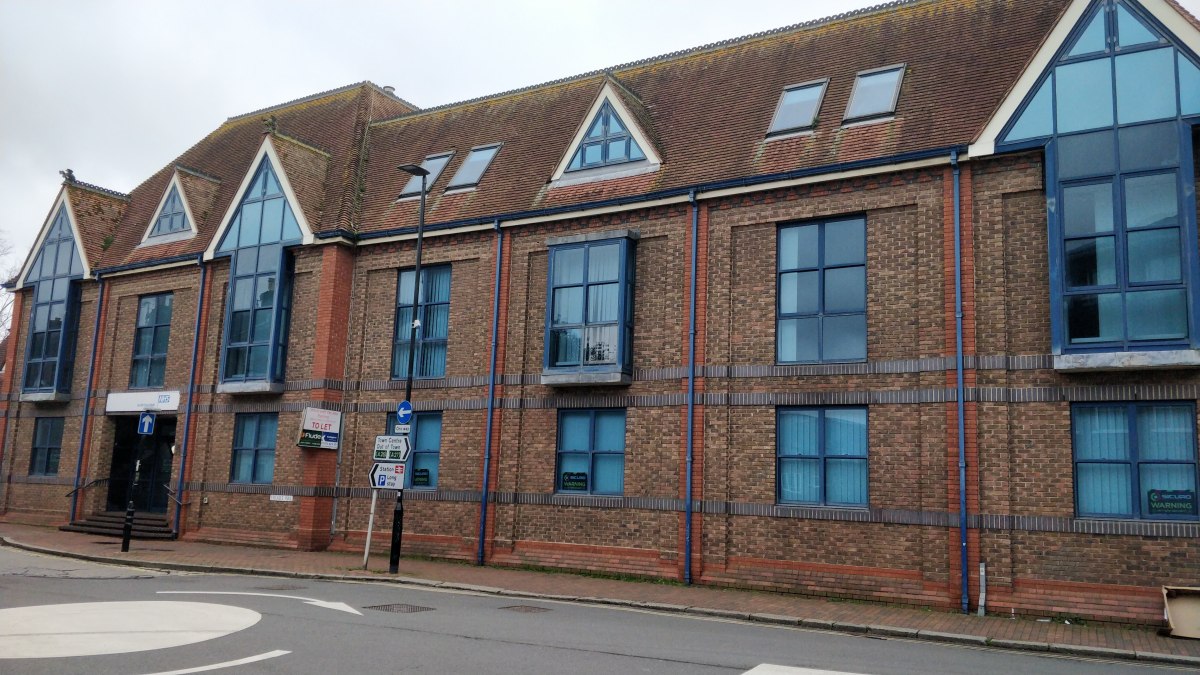
The Ukrainian refugee crisis is an emergency, and it requires emergency action. The UK needs an ‘Operation Nightingale’ approach to helping these victims of Mr Putin’s aggression. The UK Government should use its emergency powers to commandeer empty buildings which could be used to house refugees whilst better accommodation is being sought. Here in Lewes District, there are examples of empty buildings such as the former NHS building in Friars Walk, Lewes (feature photo above) and the UTC building in Newhaven. Such buildings already have toilet facilities, and it wouldn’t take much to kit them out with temporary shower units and kitchens.
There is a big role also for the Lewes District Council and the East Sussex County Council. We already know that the District Council are intending to rehouse themselves at the County Hall building taking up already vacant office space at County Hall. The District Council could delay the leasing of their building to Charleston House Trust and turn over their officies for emergency accommodation.
This approach could be repeated across the UK. In England alone, there are 333 district, county and borough councils. Each of these should be asked to review publicly owned property with a view to setting up a ‘Ukrainian Refugees Operation Nightingale’
This should be linked with one important, but simple step, the British Government needs to bring down the barriers and allow Ukrainian refugees to come to the UK visa free. The rest of Europe has taken such a measure so why not the UK?











 Vic Ient