Supporter of the ‘underdog’ and fair play, freedom of the individual balanced with responsibility to the community. Supporter of our heritage and countryside. Environmental campaigner for action on climate change, sustainable farming, transport and economy
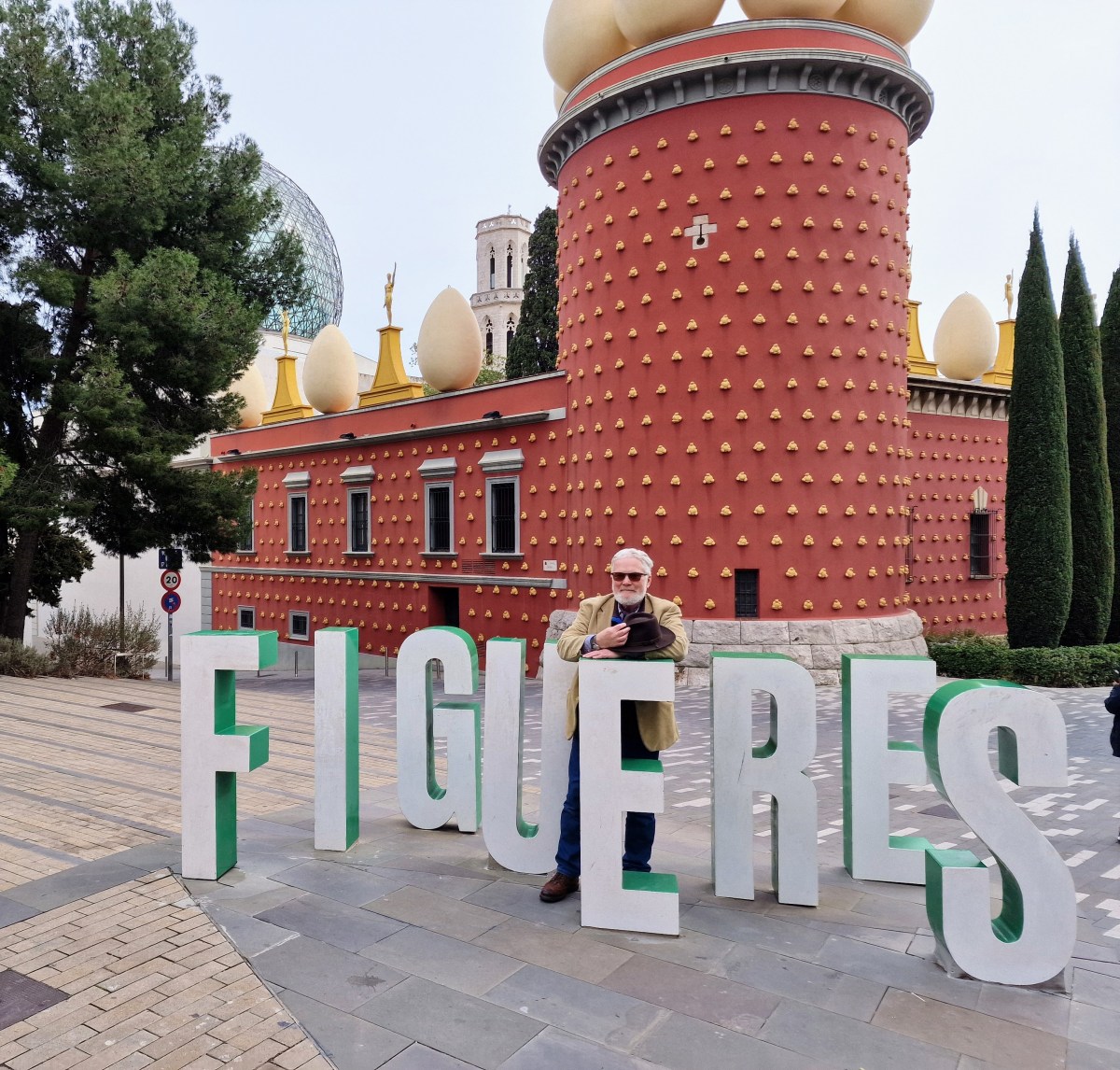
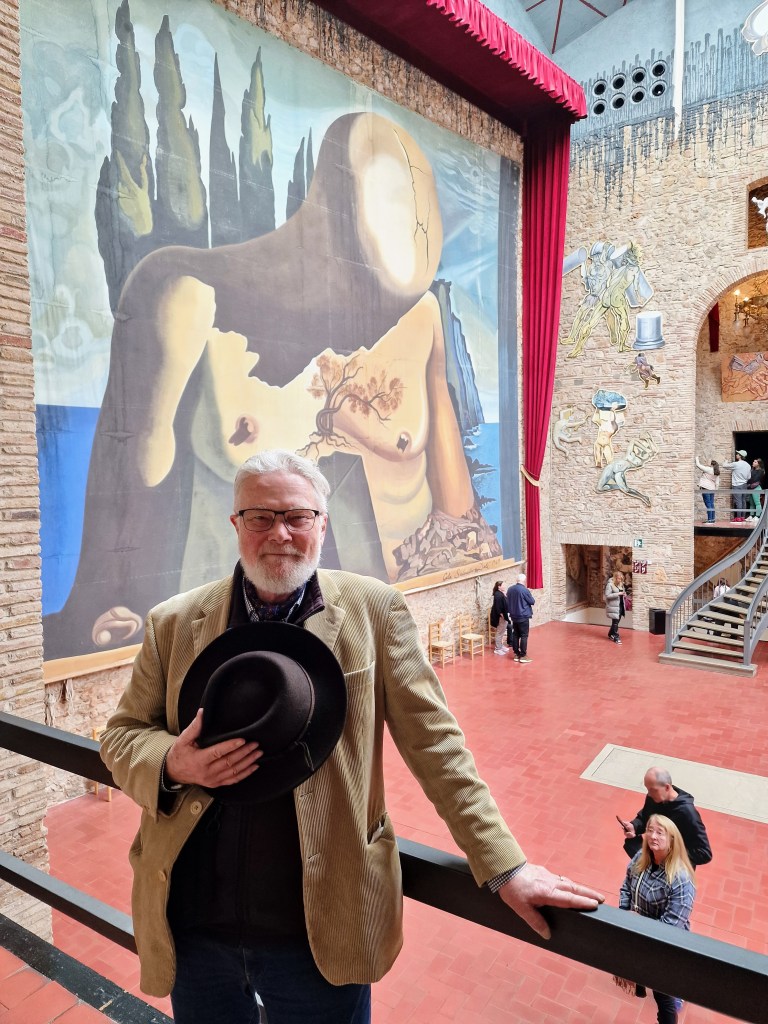
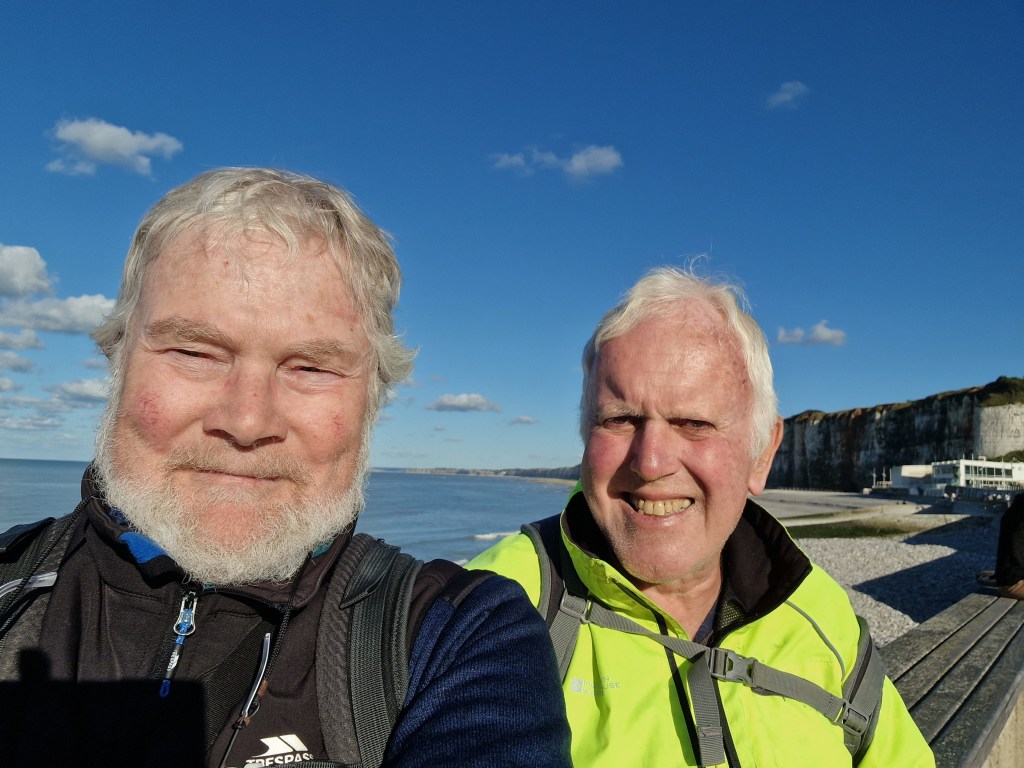
This was the highlight of the train tour through France and Spain which my friend Norman Baker and I took in February. I was blown away by the number of artistic pieces, their variety and quality.
Dalí Museum – Figueres, Cataluna Spain 25 Feb 2024
This was the highlight of the train tour through France and Spain which my friend Norman Baker and I took in February 2024. We were blown away by the number of artistic pieces, their variety and quality. It is the best art exhibitions I have ever seen in the whole of my 78 years on this planet. You have just got to go and see it to believe the fantastic art!
I quote from one guide “The Dali Theatre Museum is definitely something worth experiencing, if not to get a better understanding of Dali, then at least to enjoy the opportunity to witness the creative eccentricity of an artist like no other”.
Figueres is the birthplace and final resting place of iconic Surrealist artist Salvador Dali. The town is also home to the Dali Theatre-Museum, a masterpiece of surrealism that the artist designed himself.
Great cycling trips and days out including Coast to Coast in France along the Canal du Midi!
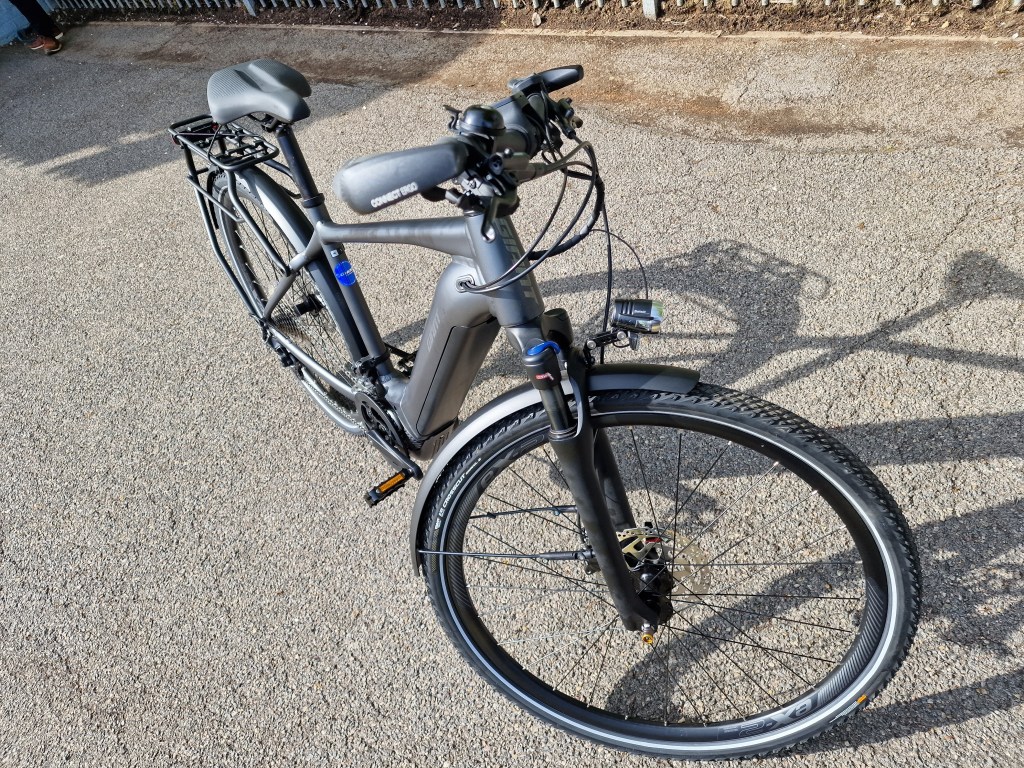
Total distance covered in 2024 was = 2240 km (1392 miles) since collected my new 800W Giant Explorer electric bicycle in May. This has a fantatic range – mile for mile much better than my 2019 500W Giant Explorer.
Some great trips to France and some wonderful days out in Sussex. I also managed to combine cycling with trips to Lyme Regis which were wonderful in the beautiful autumn days. These trips don’t include the Monday morning bike rides with John’s group here in Lewes. Unfortunately I didn’t have my Garmin for the first four months of the year so I don’t know what distances I covered in this period.
Canal du Midi – Coast to Coast Cycle trip
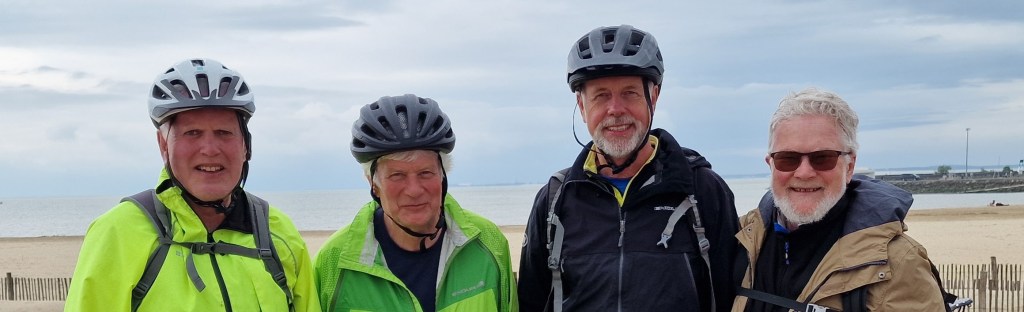
Johm, Martin, Jon & Vic at the beging of the Coast to Coast cycle trip at Royan, at the mouth of the river Gironde
The Coast To Coast cycling distance was 631 km (392 miles)
Edward, Adrian & William on the quayside opposite the Restaurant Le Cap, on the Rue du Port, Barneville-Carteret on the west coast of the Cherbourg peninsula, France
It’s Remembrance Day today and I would like to remember my Mum.
After the Second World War, my Mum had a very difficult time. She had returned from Australia with my two brothers, George and John, to a very wet, rainy and cold Liverpool in June 1945…….
It’s Remembrance Day today and I would like to remember my Mum.
After the Second World War, my Mum had a very difficult time. She had returned from Australia with my two brothers, George and John, to a very wet, rainy and cold Liverpool in June 1945.
Mum in Australia with brothers John and George
From what I understand, there was very little support from the Government or the Army for Mum’s return. I believe she, first of all, went to South Wales to her relations. My brother George recounts the experience – they were put up by an Uncle and Aunt on a run-down farm near Abertridwr in a Welsh mining valley near Caerphilly. I haven’t got any recollections from John, but clearly, immediately after the ending of the war in 1945, before the war had formally ended, it was a very difficult time for Mum, on her own, with a husband still in a Japanese POW camp. They were only in Wales a few weeks, and they soon took a train to Granny’s place in West London at Hanworth, near Hounslow. Here we are in a completely different situation. I remember Granny in the early 1950s, she was a warm and friendly person, and I’m sure, she was very welcoming to Mum and my brothers in 1945. My brother George remembers life at Hanworth fondly. He recounts the story of his cousin Roddy, who was in the RAF during the war, taking him off canoeing on the River Thames at Isleworth, where the canoe was towed on a trolley by a bicycle. Both George and John went to school in Hounslow.
George had his eighth birthday as they came through the Panama Canal on the steamship Dominion Monarch. John was 11 as they arrived in England. Unfortunately, the army could not give Mum army quarters until my father had returned, even though it was known by then he was a survivor of the prisoner of war camp from at least September 1945.
Mum had had a very pleasant time in Australia, although it must have been very difficult for all of the wives who were evacuated there from places like Hong Kong with their concerns as to whether their husbands had survived or not during the conflict or imprisonment, but now the post-war reality was kicking in. Dad returned home to Southampton in November 1945. Ironically, on the same ship which my mother had come home on in June 1945, the Dominion Monarch docked at Southampton. My Dad, with other servicemen, mostly former POWs disembarked, but they couldn’t go home. Dad was billeted in a bed and breakfast house in Southampton. Mum said it was in a terrace of houses in of the suburbs of Southampton itself. Mum visited there, but she wasn’t allowed in the B&B accommodation. The landlady flatly refused to allow her to go in as men and women weren’t allowed to enter and share the house with a man, even though she was his wife! How terrible.
After five years of separation, Mum had to stand at the garden gate of this property to see my father. It must have been heartbreaking. By November 1945 the population of the UK had forgotten about the hero’s return. There was no hero’s return for my father at Southampton. It was a rainy, wet November day when he returned.
Eventually, at some point in early 1946, Dad was allocated army quarters in Aldershot at No 1 Nicholson Terrace, which was where I was born on the 9th of September 1946. The terrace is not here now. From the description which both my brother George and John gave it had an outside toilet, no bathroom, and I was bathed in a metal tub in front of the stove in the parlour, which passed for both a kitchen and a sitting room. Early in 1946 Dad was posted to Yorkshire for military training. He wasn’t a national serviceman, so his career would normally continue in the army. In their rather ironic wisdom, the Army authorities thought that these ex-POWs needed to get back into the discipline of the way in which the army worked. This training consisted of marching up and down on the parade ground. There was no psychological rehabilitation or any other help. It was just army drill, day after day. Some men became completely fed up with this. My brother, John, said that Dad simply just walked off the parade ground and went to the commanding officer’s offices and asked to be demobbed there and then.
Ultimately, this decision led to Dad and the family having to leave the army quarters in Aldershot and apply for housing with the local Aldershot Borough Council. That is how the family came to live at 111 Gloucester Road where I grew up.
Dad had quite a lot of money after the war because he had years of back pay. Unfortunately, he spent most of this money showering presents on his mother and on other relations in the family. This quickly left us with little or no funds. Very unwise, but also understandable, since he felt he was free and wanted to give to others whom he loved. However, this meant Mum, my brothers, and I had less money to live on, and those first years after the war were quite hard years. Dad applied for and got a job with the Post Office Engineering Department, but not as a manager or senior engineer, which was more or less his rank in the army, but as a labourer. In the winter of 1947, he was in almost in a worse situation than he was as a POW. The winter of 1946–1947 was one of the harshest ones on record – freezing temperatures and massive snowdrifts. The Post Office Engineers were trying to re-erect the overhead cables and wires that served both the local area and also served national communications. It was a disastrous winter. Dad was in freezing conditions and on the pay of a labourer.
By the time we get to 1948 and Gloucester Road, the family had very little income, but we had a house! Brother John worked every morning for Stays Dairy before he went to school, delivering milk through the streets of Aldershot. I fondly remember Mr. Stay and John calling in at the house on Saturdays for a nice, hot, steaming cup of tea during the milk round and sitting in our kitchen with a nice hot stove to warm them up. Outside, the milk float, which was pulled by a horse, was tethered to a tree and the horse munched hay from his nosebag.
When I was not quite four years old, John at 15, joined the Army Boy Service. His career is another story, but safe to say, this was a major boost to the family’s finances, because it was one less mouth to feed. The Army were going to feed and clothe John. Two years later, George joined the army. He joined the Army Apprenticeship Corps. As John left, the Aldershot Borough Council were encouraging families to take in lodgers to help with the family finances and give homeless people somewhere to live. We had Helen and David living with us for a number of years. This was a major help to Mum, who needed to go out to work to supplement the family income. Her friend Steve, ‘Auntie Steve’ to me, found her a job at Mrs. Brigham’s kitchen restaurant in North Camp Farnborough.
Both women worked there for many years. It was a tough thing working in that restaurant. The journey to and fro was time-consuming. Firstly, they had to walk from our house to a bus stop, which was about half a mile away from the Heron pub. They then got the No 24 bus into Aldershot bus station, where they changed buses for North Camp. So, the return journey was the same – an extended day after being on her feet all day at the cafe. Auntie Steve worked in the kitchen, and Mum was a waitress. Auntie Steve, later on in life, died of an ulcer in her leg. I put this down to standing up all day, every day, working in that kitchen. And Mum ended up with very serious varicose veins, and that I also put down to standing up all day. However, one can’t say this was all a horrible experience.
I can remember going to North Camp as a young boy being welcomed by the benign, rather large, round Mrs. Brigham. Although she’d been in England a long time, Mrs. Brigham still had that twang of a Dutch accent. Every time, I enjoyed a large plate full of food which Auntie Steve provided for me. It was a great cafe, and everybody was so friendly.
In those days, the cafe restaurant at North Camp was, like many others, providing breakfast, lunch and early dinner. This was quite common in those days. It provided wholesome English meals right throughout the day for soldiers, travelling salesmen, local people and workman. Mum worked there for many years, and thankfully, Helen was around to look after me as I came home from school. I called her Auntie Helen, which was the customary thing in those days. Mum did the early shift, so she was home by about 4pm but, my goodness me, wasn’t that hard work? Five days a week. Eventually, Mum was able to get a job as housekeeper for the Queen Alexander’s Royal Army Nursing Corps, in Aldershot. This was much better for her, and hours were shorter. She had a starting time of 6:30am every morning, she cleaned and made the beds for in the nurses’ hostel. She didn’t have to cook the meals, but I remember talking to one of the nurses there and saying that my Mum was heavenly, in the sense that if any of them had any troubles, they would come into the nice, warm kitchen that was Mum’s ‘HQ’, if you like, and she would sit there and have a cup of tea and talk over any problems the nurses had. She was very well liked in that job. Fortunately, after many, many years, Mum was able to retire with a pension.
Life did get easier as we went through the latter part of the 50s, but those early years were really tough for Mum. We didn’t have a washing machine or a fridge. Mum did all of the washing, including Dad’s dirty clothes from his labouring work outside on the Post Office gangs, with a boiler and a mangle to ring the clothes out. There were lots and lots of times I saw her working away in the kitchen or in the outside brick shed where the mangle was kept. The resulting effect of all this home laundry work was that we were always smartly turned out with beautifully ironed shirts and lovely crisp sheets to sleep in. Mum was tireless with her cooking at home. Sunday breakfast and dinners were a particular pleasure, especially if my brothers were at home on leave. In that tiny kitchen in Gloucester Road, we’d all sit round and have eggs, bacon. Dad would have just come in from the garden or the allotment. The stove in the corner would be hot and toasty to keep us warm in the winter, Mum would spend the whole of the morning on Sunday preparing a wonderful Sunday lunch. Her cooking was ‘par excellence’. There were quiet times mid-morning on a Sunday morning, when Auntie Steve would pop round and have a chat with Mum. Auntie Steve was a large busty woman. She always wore her apron cross-folded across her breasts, which accentuated their size. She would stand in the kitchen with her arms crossed, Mum talking to Mum in a quiet, consultative way. All I heard was, ‘oh yes’ or ‘well you never!’ every now and again. Mum would make Auntie Steve a milky coffee Mum would have a black coffee. She never took milk ever. It probably contributed to osteoporosis later on in life.
All in all, Gloucester Road was a very happy household, but by golly, Mum did work hard to hold things together. That’s not to say that my Dad didn’t do his fair share. He did work very hard. For instance, he even took on extra work around Christmas time, driving a lorry to take Christmas parcels to army camps in the area. This meant he not only worked in his free time leading up to Christmas, but also worked on many Christmas mornings in those early years after the war, delivering the last load of parcels.
Life did get better for both Mum and Dad. We eventually got a fridge, and we did get a television, but that wasn’t until the early 60s. Dad did get promotion, and he eventually did become a manager for the Post Office Engineering Department based at the area headquarters at Guildford.
Mum asked very little or nothing from life and gave much comfort and love to all of those around her.
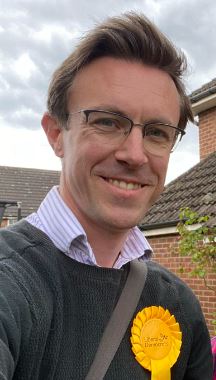
Wealden Liberal Democrats have chosen environmental policy expert, 44-year-old, Ben Dempsey to be their candidate for the new constituency of East Grinstead and Uckfield.
2024 General Election
Background
Ben has worked for more than 15 years for humanitarian and environmental charities. He has a masters degree in sustainable development and a PhD in nature conservation. Ben grew up in Haywards Heath, went to Oxford University and lived in London for ten years, before moving back to Sussex in 2010 to raise his family. His career has included working for humanitarian and conservation charities for over 15 years, and has worked in Haiti, Myanmar, Israel and the Palestinian territories.
He was a Mid Sussex District councillor from 2019 to 2023. As a District Councillor, he focused on planning and the environment, securing improvements to nature recovery policy in Mid Sussex.
Ben said the Lib Dems aim to tackle the cost of living crisis, stop sewage getting into rivers, and restore political standards and the rule of law.
Local Government
District Councillor Mid Sussex District Council (May 2019 – May 2023 · 4 yrs) representing Hassocks. He worked on issues relating to planning and the environment, including proposing a successful budget amendment to create a £100,000 special reserve for sustainability.
Quotes
“Our politics can be so much better. The behaviour of the current government has undermined British values of honesty and tolerance, and we seem to be losing the ability to address complex issues in a rational and reasonable way. I want to be elected to help restore decency, competence and compassion in our country.”
“People in East Grinstead, Uckfield and local villages are desperate for our politics to be better. We are losing the ability to discuss complex issues in a rational and reasonable way. I offer residents the chance to have an MP who listens and is respectful of different shades of opinion, even if we don’t always agree. I believe the values of tolerance, honesty and decency are shared by the vast majority in this country.”
“If I am elected, I will represent the people of East Grinstead and Uckfield with the outward-looking, tolerant, liberal-minded politics that has been so sorely lacking in recent years.”
“I have lived in Sussex for most of my life, and want to champion the issues that matter to local people. In particular, I will campaign to change the government’s planning system – putting more power in the hands of communities and taking it away from the big developers. That is the only way to tackle our housing crisis, by building the kind of green, affordable homes people actually need, not just the ones that make the most profit for large corporations.”
PhD in the social science of UK nature conservation – ESRC Doctoral Researcher, Science Policy Research Unit, University of Sussex
MA in Science, Society and Development from the Institute of Development Studies
BA in Archaeology and Anthropology from Oxford
Working Career:
Currently:
Wilder UK Landscapes Adviser for WWF.
Leads WWF UK’s work on how to incorporate ‘rewilding’ into conservation policy and practice. Includes broader questions about how we simultaneously restore nature, tackle climate change and meet the needs of people, in the UK and internationally. He is particularly interested in working with farmers to deliver nature recovery alongside food production, breaking down barriers and reducing conflict between farming and conservation
Liberal Democrat Manifesto 2024:
with a summary of policies and link to the full document
FOR A FAIR DEAL
Liberal Democrats: This election is the chance to win the change our country desperately needs. Every vote for the Liberal Democrats is a vote to elect a strong local champion who will fight for a fair deal for you and your community.
Click HERE to read the manifesto online. Click HERE to read and download a summary of the manifesto.
Click HERE to download the complete manifesto in PDF format.
Click HERE to download the Manifesto Costings Summary
The manifesto covers:
Foreword
Our Fair Deal
The Economy
Business and Jobs
Climate Change and Energy
Health
Care
Education
Families, Children and Young People
Pensions and Safety Net
Crime and Policing
Natural Environment
Food and Farming
Housing
Communities and Local Government
Transport
Culture, Media and Sport
Immigration and Asylum
Rights and Equality
Political Reform
Defence
International
More information
About James MacCleary – Liberal Democrat Parliamentary Candidate for the Lewes Constituency
About James MacCleary – Liberal Democrat Parliamentary Candidate for the Lewes Constituency
James MacCleary, BA., MSc.,
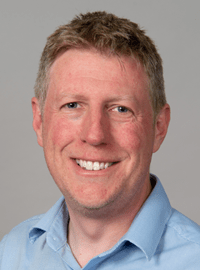
James is the Parliamentary Candidate for the Lewes Constituency in the General Election which will be held on July 4th.
He has lived in Newhaven for 8 years with his young family. Prior to that, he was a Lewes resident and Lewes councillor.
Currently he is a Lewes District and an East Sussex County Council Councillor. Between 2019 and 2023 he was Leader and Deputy Leader of Lewes District Council in a shared role .
Local government roles:
He was both Group Leader of the Liberal Democrats at the Lewes District Council from 2019 to 2024.
Lewes District Councillor from 2007-2015 (Bridge Ward) and 2019 to present (Newhaven).
Councillor – East Sussex County Council May 2021 – present
Councillor – Newhaven Town Council May 2019 – May 2023
Lewes Town Councillor from 2011-2015
Business Roles:
Director – Breakthrough Communications & Strategies
Campaigns and Stakeholder Manager – National Literacy Trust
Campaign Director – European Movement UK
Campaign Manager – RSPCA
Education:
University of Kent – BA, Politics and International Relations
University of Oxford – MSc, Russian and East European Studies
More information:
Liberal Democrat Manifesto 2024: with a summary of policies and link to the full document
The General Election is just weeks away, on the 4th July…… But who will win in Lewes?
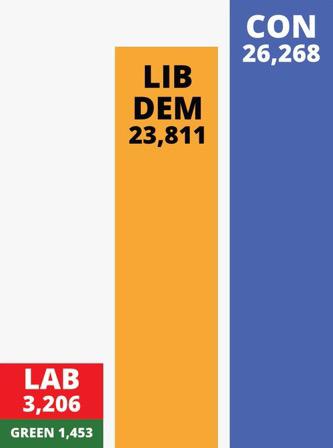
The chart above shows the state of the parties in the 2019 election
The General Election is just weeks away, on the 4th July……
But who will win in Lewes?
In the elections of 2015. 2017 and 2019 the Conservatives won with the Liberal Democrats hot on their heels. Both parties were many thousands ahead of the other parties. So, it looks like a battle between the Tories and the Lib Dems.
However, we have to remember this is a First Past The Post election where the winner takes all, even if they are just a handful of votes ahead of the rest. This means if the Green and Labour parties put in a good showing, then the Conservatives could easily retain the seat. On the other hand, if the Reform Party does in fact put in nomination papers for their candidate, then the Conservatives are likely to suffer. No doubt the campaign will hot up in June!
Here is a guide to the results of the 2019 election:
The Conservatives won in 2019 with 2,457 votes, – just 4.50% margin. This was down by 5.7% from the 2017 election.:
The General Election in the UK on 4th July presents a crucial opportunity to restore hope for the nation.
The General Election in the UK on 4th July presents a crucial opportunity to restore hope for the nation. This election is a pivotal moment for the country to address pressing issues and make decisions that can shape a brighter, more positive future for all its citizens. By participating in the democratic process, voters have the power to influence policies that tackle economic challenges, improve public services, and enhance the overall quality of life. This election is a chance to bring about meaningful change, promote unity, and build a future filled with optimism and opportunities for everyone in the UK.
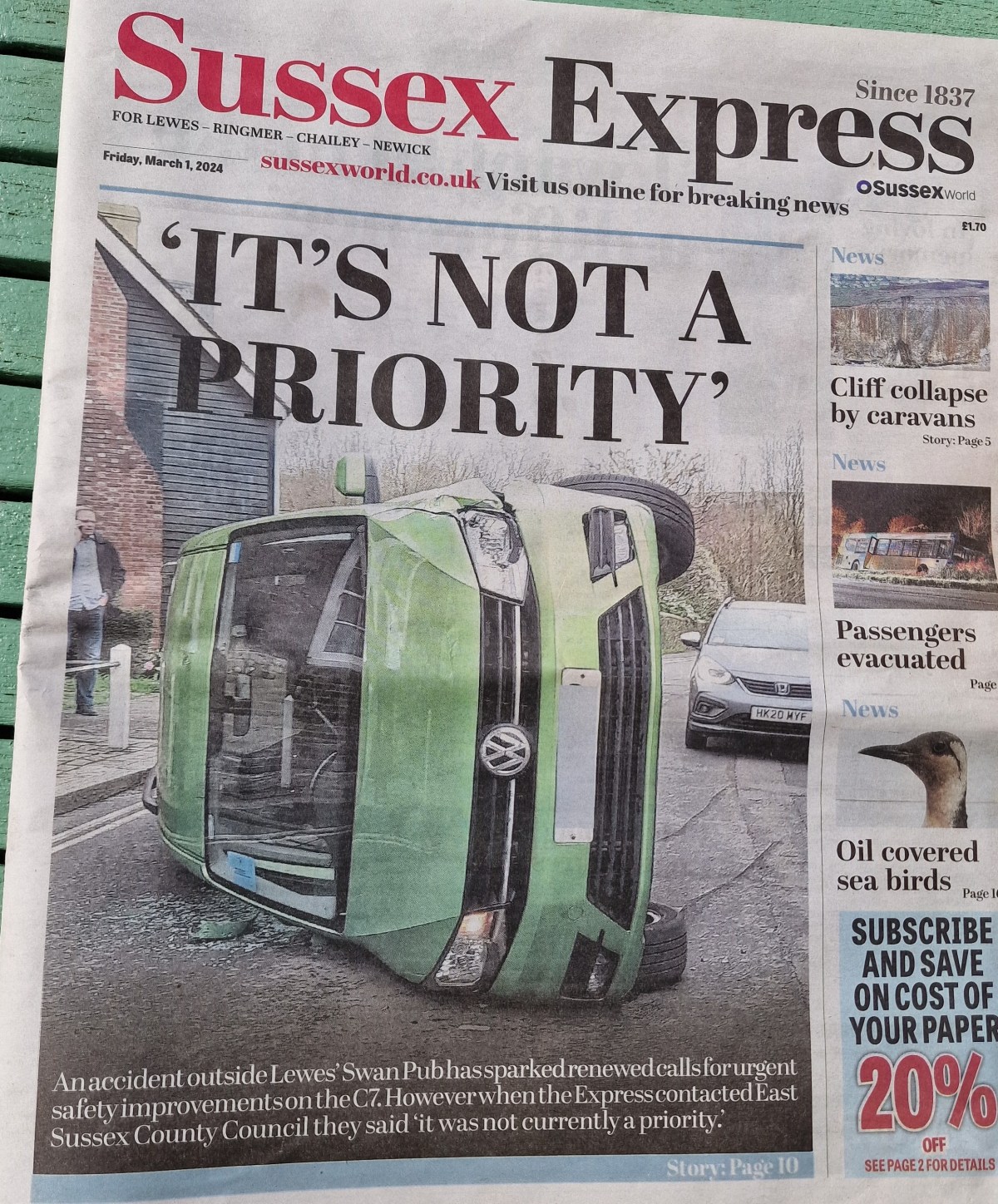
Traffic Calming on the Kingston Road Lewes and at the Swan Inn is not likely to happen anytime soon because of the ESCC ‘sitting on their hands’ and the Lewes Town Council being caught up in ‘administrative’ processes!
A report by Vic Ient
9th April 2024
As some in Lewes may know, I have been corresponding with East Sussex County Council (ESCC) about my concerns for safety along the Kingston Road and at the Swan Inn junction, Lewes. I have also been in touch with the Lewes Town Council to gain their support as, so far, ESCC are finding all sorts of excuses to do nothing. ESCC are not willing to change their stance until there is a death or serious injury. Also, despite my appeal, I fear the Lewes Town Council, will not take a lead on this issue and put together a funding plan in the near future. It all adds up to delay, delay, delay!
It would be helpful if others take up the issue in order to show there is public support for action.
A 2 week touring holiday in northern Spain, visiting 3 historic and beautiful cities with our EV car. 600 miles and zero global warming emissions. A fantastic visit to three beautiful ancient cities
A two-week touring holiday in northern Spain:visiting 3 historic and beautiful cities with our EV car
Just over 950 km (600 miles) -Three time the distance between London and Manchester. One charge en route an 2 short charges at hotels (one free!). Zero CO2 emitted and zero global warming emissions from our car!
April 2023
By Ferry from Portsmouth to Santander
For some time we had wanted to visit the wonderful historic cities of Salamanca, Segovia and Ávila in western Spain and in 2023 we decided to make it happen by travelling first by ferry to Santander in northern Spain. We decided to check out Brittany Ferries new low emissions ship, Santoña (fuelled by LNG instead of dirty old marine diesel oil). It certainly was a much more pleasant experience as when on deck you didn’t get that smelly smoke in the downdraft depending on which way the wind was blowing. We then had the question of shall we take the car or shall we go by train to these cities?
Travelling in Spain by electric car or train?
It is certainly possible to travel by train, on the often new, electrified service. However I wanted to experiment in taking my electric car abroad. It’s a Kia Niro with a 64.8 kWh battery with a range of about 285 miles. Over the three years that I’ve had this car I’ve found that the manufacturer’s range prediction to be pretty accurate.
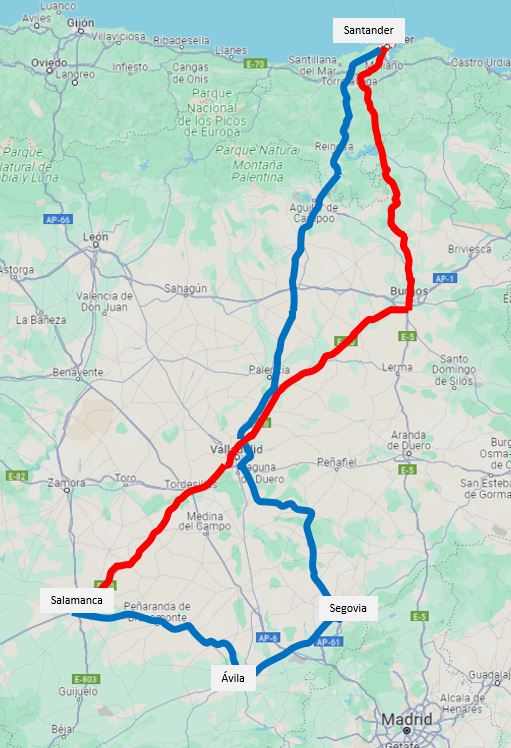
Having done some research on recharging stations, I was confident that we could make the journey despite the fact that the distances on the rural sections of our trip were sparsely populated with charging stations. My confidence was boosted by the relatively good range of our Kia Niro EV car as it was clear that whilst we may not find a charging station out in the countryside or going through the Picos de Europa mountains we would certainly find stations in the bigger towns. For day one of our journey in Spain I was fairly safe in the knowledge that we could call into the large city of Burgos to refuel before going on to Salamanca. The total distance between Santander where the ferry arrived and Salamanca is 265 Miles (426 km). I realised the range of my car would not cover this distance in one hop.
Charging your car abroad
The other question which arises is how do you charge your car abroad? It was clear one had to get a charging card from one or other suppliers. I didn’t want to get tied down to a supplier for only one country as this would be limiting on future visits to other European countries. After some brief research I found that taking up membership with Chargemap would give us access to a wide range of charging stations across Europe no matter who the local supplier was. You have to sign up for their card which costs €19.90 for a one-off purchase. Their app also provides you with a map of all compatible stations in the country you are driving through. I decided that it was worthwhile getting this card rather than relying upon the possibility of just using a credit card or using my European Shell Recharge card. Shell had lots of EV recharge stations in Europe but didn’t have any in Spain. On the other hand the Chargemap service seemed to have loads of stations on their map. This turned out to be correct as the main Spanish petrol and diesel fuel supplier, Iberdrola, also provided most of the intercity and motorway charging stations. It was clear that the Chargemap service was compatible with the Iberdrola stations.
At Portsmouth we recharged at the Instavolt fast charging station which is within the ferry port area. This was hugely convenient as we didn’t have to stop on the way to Portsmouth and we would be ready to go immediately on arrival in Spain.
Santander to Salamanca
After a very pleasant crossing we arrived at 8 am. We set off on the old main road south towards Salamanca. It was a lovely journey through the Picos de Europa and the road was relatively quiet as most of the traffic uses the autopista (motorway). Once though the mountain range we entered the high plains of the Castile and Leon province. We called into Burgos to recharge the car. We had looked for charging stations on the road down to Burgos but the few we saw were still in construction. It was a bit confusing in Burgos because my onboard map system didn’t make it clear where the charging stations were. I believe it was out of date, So we used the Chargemap map on my smartphone. This made things a little difficult because I was the driver and couldn’t look at the app and drive at the same time. After a number of stops we eventually found an Iberdrola co located with a fuel station.
We were pleasantly surprised when we got to our hotel in Salamanca (the NH hotel Palacio de Castellanos ) as it had two charging stations in the garage. The concierge helped me load down their own app so we were able to charge up ready for when we left Salamanca.
Salamanca is a beautiful ancient university city and is well worth a visit. The central part of the city is a UNESCO world heritage site because of its important historical and architectural heritage. It has many stunning buildings, pedestrianised streets and great restaurants.
Our next stop was the ancient fortified town of Ávila. It was only just over 100 km away, well within the 400 + km range of our car. Again, we were pleasantly surprised when we got to our hotel, the Parador de Ávila, as this also had charging stations in the garage and this time they were free! Avila is absolutely worth visiting for its remarkably well-preserved mediaeval walls and historic architecture.
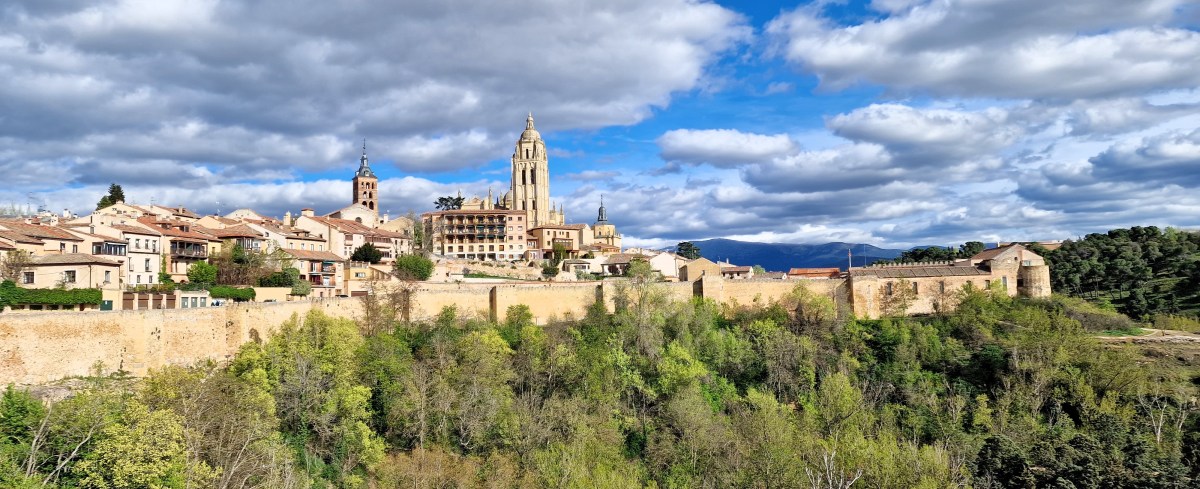
Our next stop was just 65 km east to Segovia. Our hotel was in the central plaza mayor and they operated valet parking so we were unable to charge. However we weren’t worried about this as we had over 350 km range remaining. Segovia is another world heritage city; a must see is the massive Aqueduct of Segovia. It is the defining historical feature of the city. It was built by the Romans in the first century AD to channel water from springs in the mountains 17 kilometres away. Another must see is the Alcázar (palace). It may have had Roman origins but certainly by being called ‘alcázar’ it was probably a Moorish palace prior to the ‘reconquista’. It has been much modified over the centuries and now resembles a German castle more suited to the banks of the Rhine in Bavaria with its tall towers overlooking the surrounding plains and countryside on the edge of the city. It was one of the favoured residences of the kings of Castile.
After a fantastic visit to these three beautiful ancient cities it was time for us to journey back to Santander to get the ferry home. The distance to Santander is just over 360 km (226 miles)so we didn’t need to charge on the way back to Santander.
Conclusion
Since the trip to Spain my car has been in for a service and the onboard map has been updated. I should have made sure it was updated at the previous service. However the Chargemap app was very good and using their mapping tool was accurate. You just have to plan things a bit more carefully to avoid having to keep on stopping to look at the app.
I was very impressed with two of the hotels we stayed at who had their own charging points. This made life a lot easier. As far as charging on the motorways are concerned I expect that those we saw under construction are now working and that should also make life a lot easier as driving around a city trying to find a charging point in a country you don’t know very well isn’t easy.
Map of our Journey: red is the outward journey and blue the return