

Cycling the Camino de Santiago through the Basque Country, Navarra, La Rioja, Castilla y Leon and Cantabria
Vic Ient’s diary blog – October 2023 Photo collection click HERE
I have recently returned from cycling part of the Camino de Santiago in Spain starting from Bayonne in SW France and the final part through the Picos Europa. A 400 miles cycle ride with over 26,000 ft (7958 m) of ascent (phew!). Great adventure and some major challenges!

2025 Update! – Cycling UK, the UK’s national cycling charity, in its Feb/Mar 2025 edition published a 4 page spread about the trip. Click the image above to read the article and see the photos of the trip.
Update! My cycling companion, Jonathan has made a short video of the trip:

In 2019, my friend Jonathan and I cycled about 300 miles of the Camino Francaise from, Frómista, just west of Burgos to Santiago de Compostella. This year, 2023, was the first time after COVID we had the opportunity of completing the first section of the Camino de Santiago, from Saint-Jean-Pied-de-Port to Frómista, where our 2019 journey started. This time we were joined by our friend John Clark.
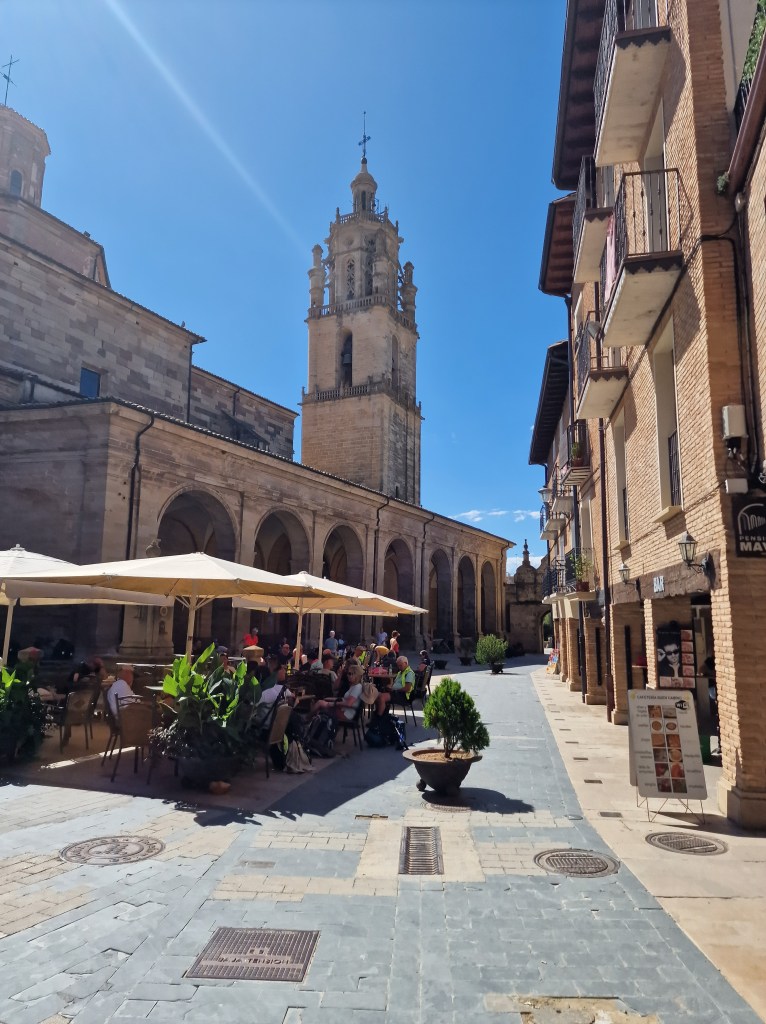
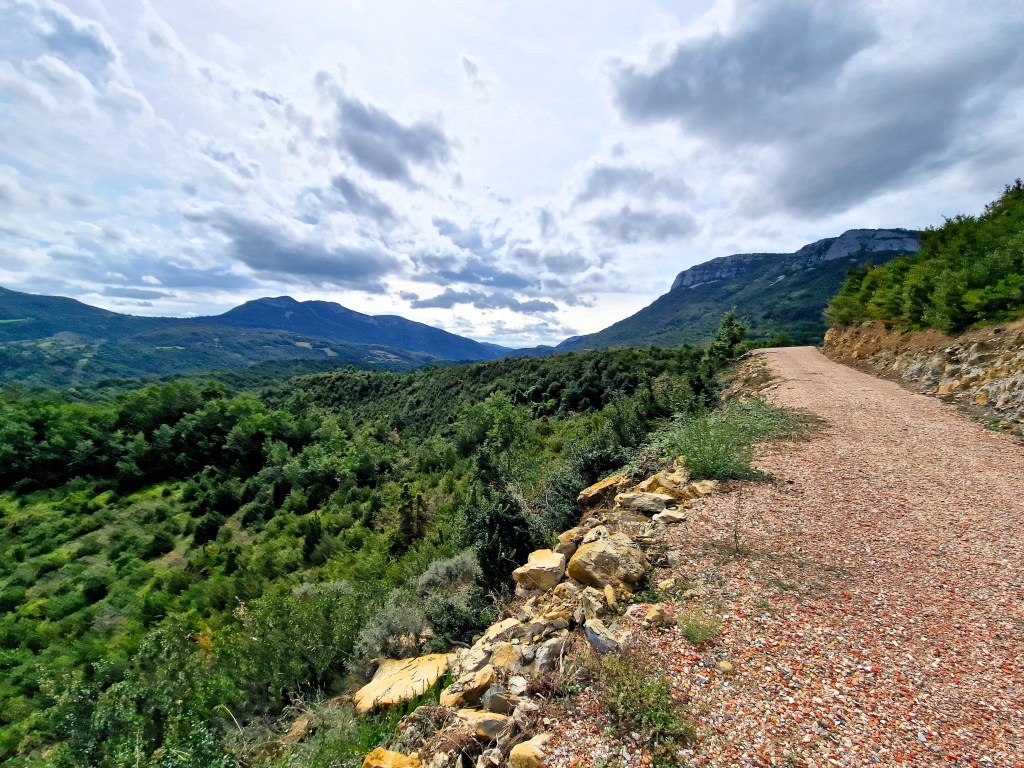
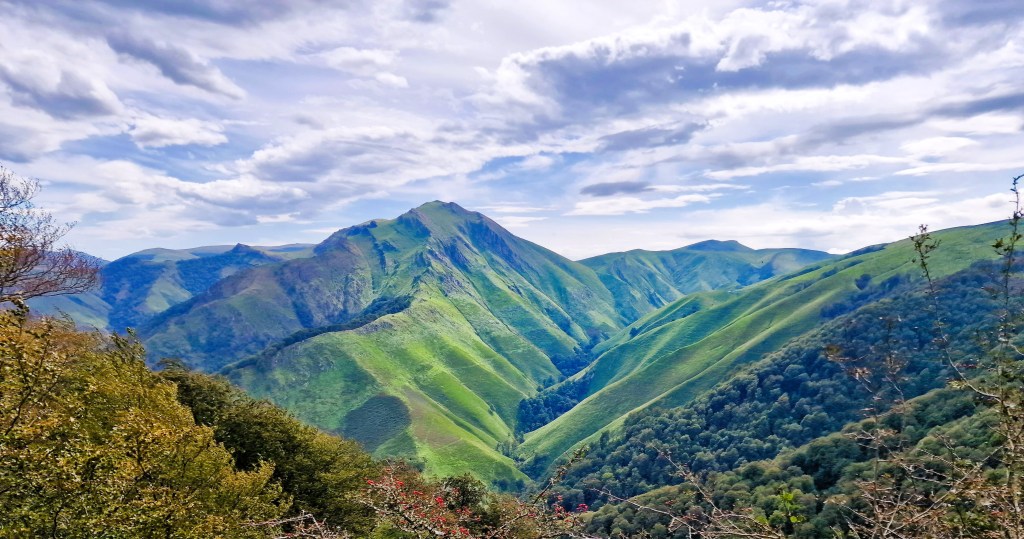
We decided that not only would we cycle the length of the path that we had not yet covered but would also turn north just after Burgos and cycle to Santander for the ferry home. Both sections, the journey through the Pyrenees and the journey through the Picos de Europa. were fantastic but also a major challenge. We had massively steep climbs during the days through the Pyrenees with the highest ascent being 1293 metres (4209ft)! It was a major challenge and stretched us to our limits. John, and I had electric bikes, but Jonathan had his specialised nonelectric. He did tremendously well. But for us older ones, it was almost a step too far. Even with the electric bikes, on each day through the Pyrenees, there was a steep ascent. We also had heavy rain on two days with strong head winds all of which might make us consider turning back and giving in. However, what we went through for a few days was nothing compared to the difficulties original pilgrims had to endure on thousands of miles of walking from France, England and Italy etc. It just reminds you of their determination to complete their pilgrimage no matter what. Collectively we supported each other and continued, and we are glad we did. It was a seminal journey. All of us will look back on it as a real achievement. By comparison the journey from Burgos up to Santander was a lot easier, although there were some very steep climbs on some days. In both sections, the views were fantastic, beautiful and far reaching.
Most of the accommodation was excellent and very economic. Typical prices were from €30 to €55 (two sharing) and €50 to €79 (single) with shower room/toilet en suite! Desayuno (breakfast) extra. Food was plentiful on route except over the first two days in the Pyrenees. It was easy to find a cafe that served pinchos (snacks) like bacon and egg rolls for a mid-morning snack. Lunch was very cheap, – typically €13 or €15 for a three-course meal including wine and bread.
We were lucky on two occasions, one at Logroño, and the other one in Reinosa to have arrived during major fiestas. They were both associated with the week-long fiesta of San Mateo (St Matthew). To read more about these fiestas and se the videos and photos CLICK HERE

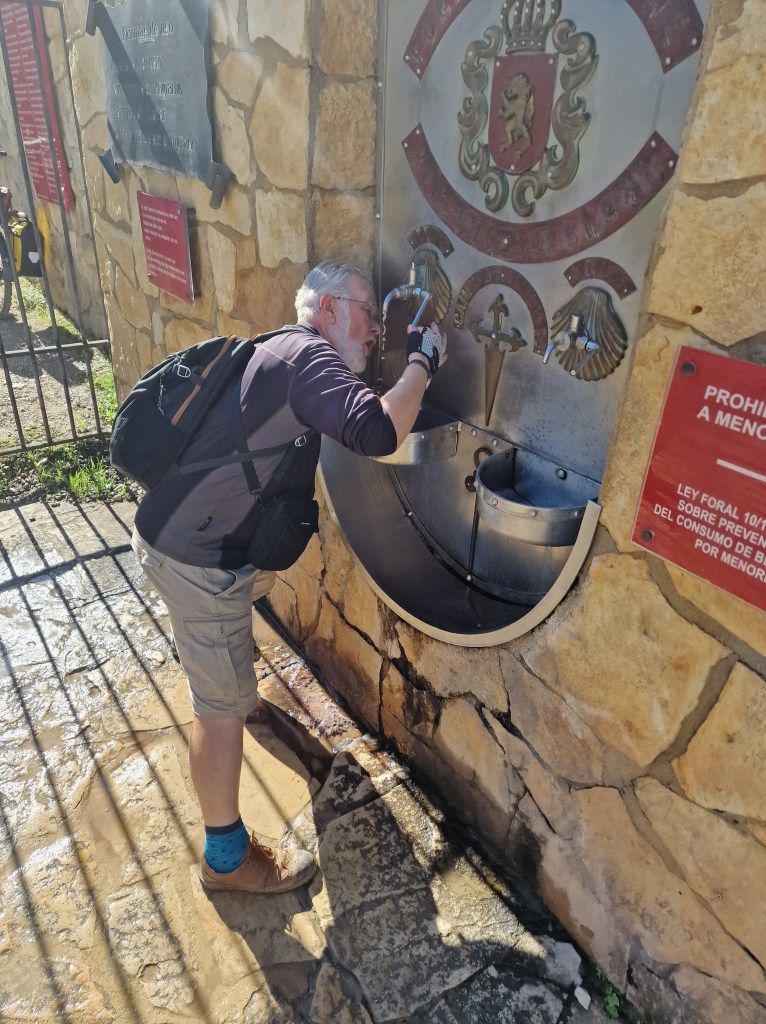
Not only did we enjoy the fiestas, but also the Wine Fountain at Bodegas Irache a few kilometres from Estella at the foot of Mount Montejurra. It was here we met hermit Friar (Fray) Lázaro de Arnotegui I had a long chat with him during which he tried to convert me to Christianity. Very nice chap. I bought his ointment for aching muscles.
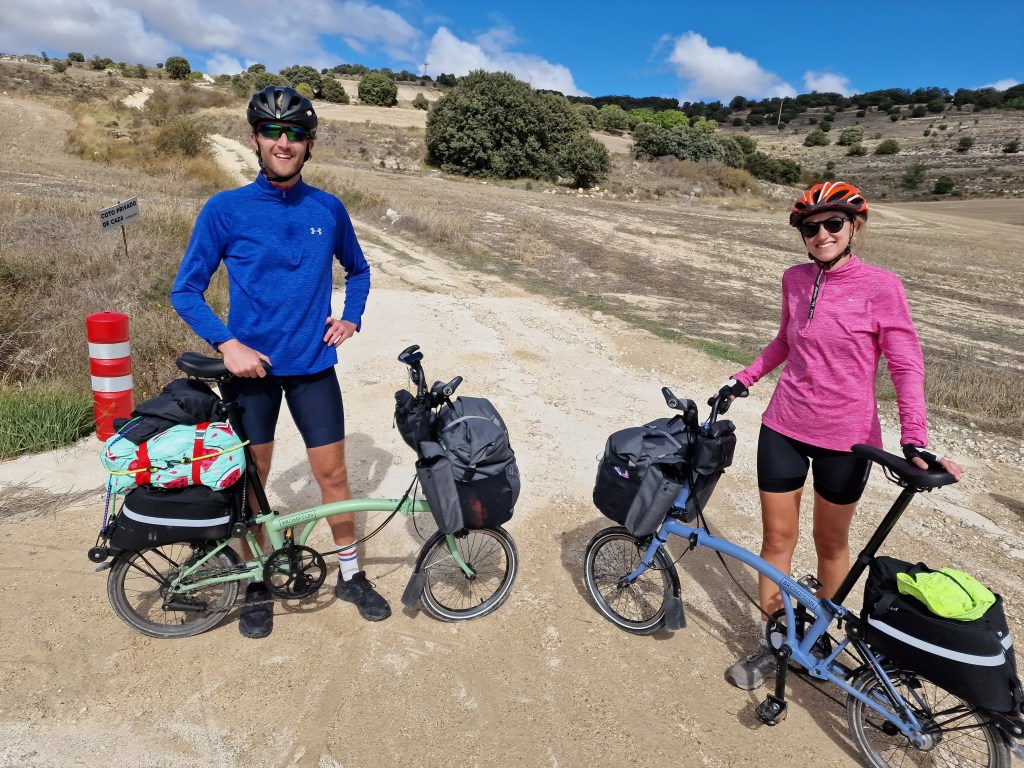
It was also interesting to talk to some of the people we met travelling on the Camino including the couple who were cycling all the way from St Malo in France to Santiago de Compostella – over 1,500 km (about 950 miles)!! It was in Castilla, west of Burgos, where I met Matt and Lydia (pictured) who were cycling on their Brompton bikes. I never thought I would see somebody cycling this far on a fold-up bike! Amazing! Apart from pleasure and achievement of cycling the Camino they are also using the trip to raise money for the charity they support: SeeSaw which offers support to families where a parent/carer or sibling is terminally ill or has died. Well done them!
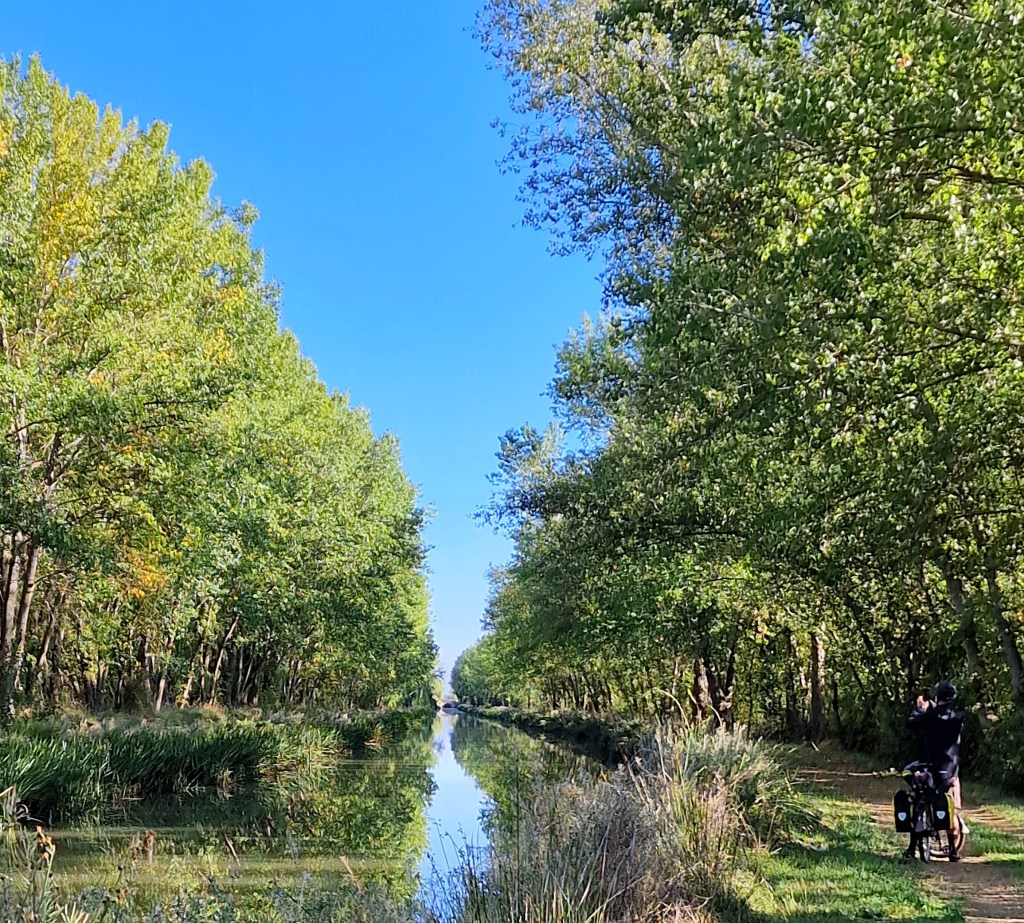
After Burgos we aimed for the Canal de Castilla, an 18th C waterway over 200 kilometres long that runs through the provinces of Palencia, Burgos and Valladolid, which a cyclist had mentioned to us some days earlier. It was a great recommendation with the canal set peacefully in the landscape. The canal stretched out a long distance in both south and north of the point where we joined it. We cycled the old towpath north for a while and then diverted off onto a quiet road which ran roughly parallel to the canal.
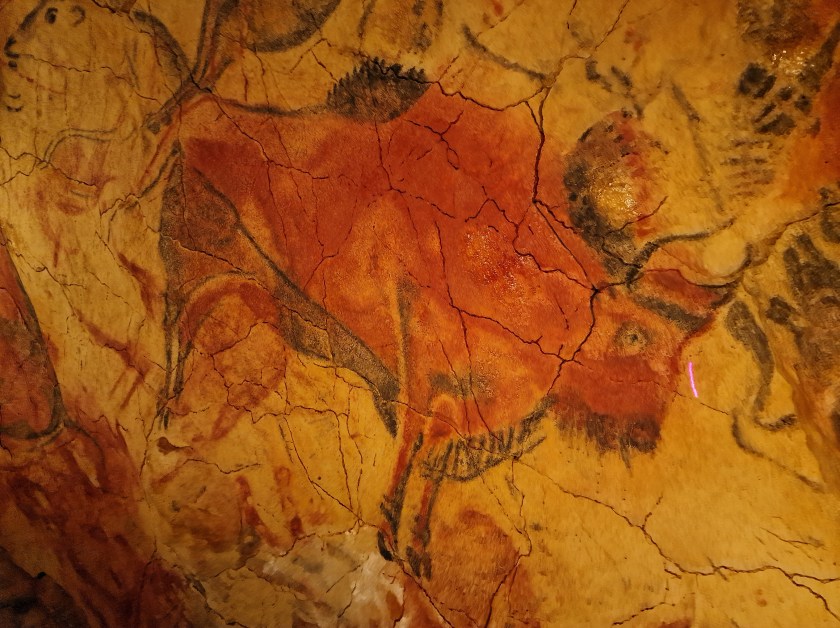
It is a beautiful route. Being a canal near a river meant to say that we had very little ascent. Near the end of our journey, and before reaching Santander we stayed at the medieval town of Santillana del Mar. We visited the prehistoric caves nearby now managed by the Museo de Altamira. The original caves themselves are closed to the public to prevent further deterioration of the cave paintings. However, the replica they have created on the hillside next to the original cave are wonderful and well worth a visit. They show all sorts of images of prehistoric animals such as bison. I believe they are some 18,000 years old.
France into Spain
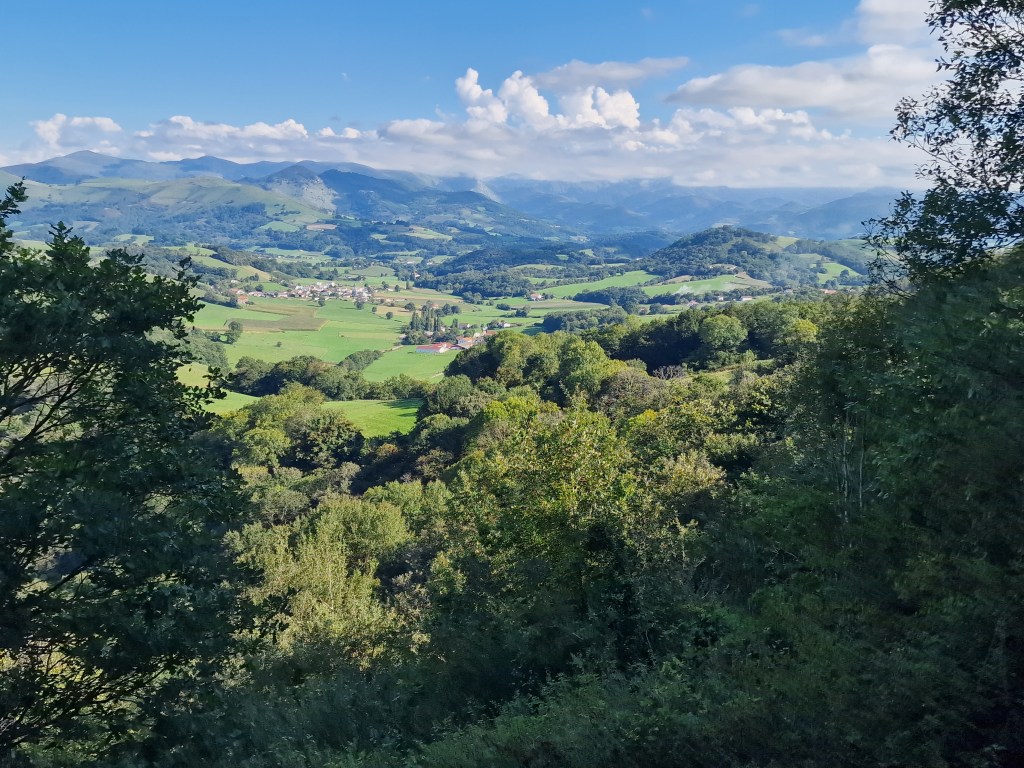
The beginning of our cycle ride actually started well inside France. After arriving by train at Bayonne, we set off the next morning by bicycle towards the Pyrenees and our first stop on the Camino Francaise was at Saint-Jean-Pied-de-Port. This was no easy journey. The ascent was some 8540 metres and near the summit the road just disappeared, and we were left with fields and tracks before descending towards our first stop. The beauty of the first part of our journey from Saint-Jean-Pied-de-Port was unquestionable, through the woodlands and uplands of the Pyrenees often with stunning views in every direction, mixed in with cycling through deep woodlands and trackways. Unfortunately, the journey was marred by rain arriving mid-afternoon, – we got absolutely soaked. Luckily, our first destination on the Camino at La Posada de Roncesvalles was welcoming with warm dry rooms and the opportunity to get a three-course meal in the evening in the comedor. This hostel was part of a monastery.
Statistics for the trip
Metric: Total distance = 640 km. Total ascent = 7958 m. (Highest ascent in one day = 1283 m). Average daily distance = 53.38 km. Average ascent = 663 m
Imperial: Total distance = 398 miles Total ascent = 26,108 ft. (Highest ascent in one day = 4209 ft). Average daily distance = 33 miles. Average ascent = 2175 feet
Total days: 12 days of cycling + 1 rest day. NB: Days to start = 2.5. Days travelling home by ferry = 1.5.
Click HERE for all the details of the actual routes on a day-by-day basis (with maps). The daily summary is at the end of this blog
Train journey through France
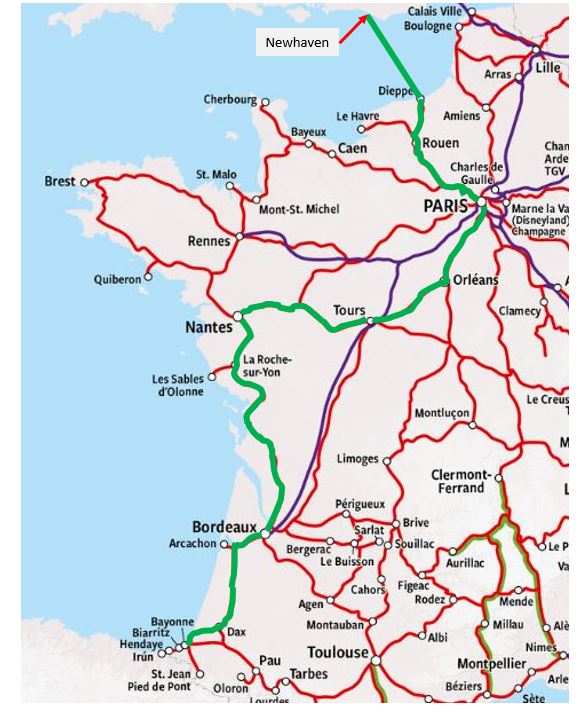
The journey through France was longer than if we’d been able to pack our bikes away and go on the high-speed railway system through France. However, Eurostar and TGV require that bicycles fit into a minimum space which wasn’t possible with our electric bikes. So we devised a route on the French regional railway system using TER trains. Actually, I preferred this way of travel. After a very pleasant evening ferry crossing, from Newhaven to Dieppe and an overnight stay at the Hotel Windsor with good petit-déjeuner, we set off by train to Paris. Jonathan guided us across Paris to get the train from Gare d’Austerlitz to catch the train to Tours in the Loire Valley. After a short overnight stop, we took an early morning train to Nantes where we enjoyed a hearty brunch. The next section took us down through western France and to our last stop in France, – Bayonne.
Many might argue that this train journey, which took roughly two and a half days, was far too long, and that it should take no more than one and a half days with an overnight stop in London and a fast train journey through France. But I would reply, this was much more pleasant and cost far less, about €129 per person + a €25 ferry crossing, and we didn’t have to disassemble our bicycles. In my view the of cost of an overnight stay in London compared with the cost of 2 nights in hotels as we crossed France roughly cancel each other out. In fact, I think France still may be cheaper! You can see the journey we took through France in the diagram below:
Daily summary of routes, distances and ascents:


 Vic Ient
2 thoughts on “Cycling in Spain – Pyrenees and Picos de Europa!”